Zborov Castle
Not far away from Bardejov in north-east of Slovakia are the ruins of the Castle Zborov, also called Makovica.
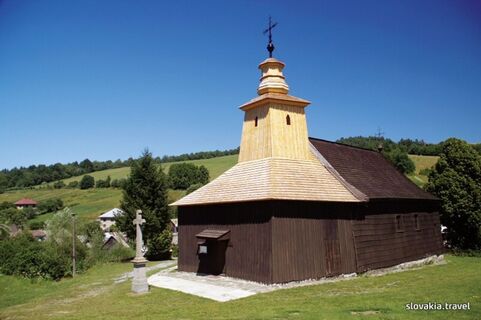
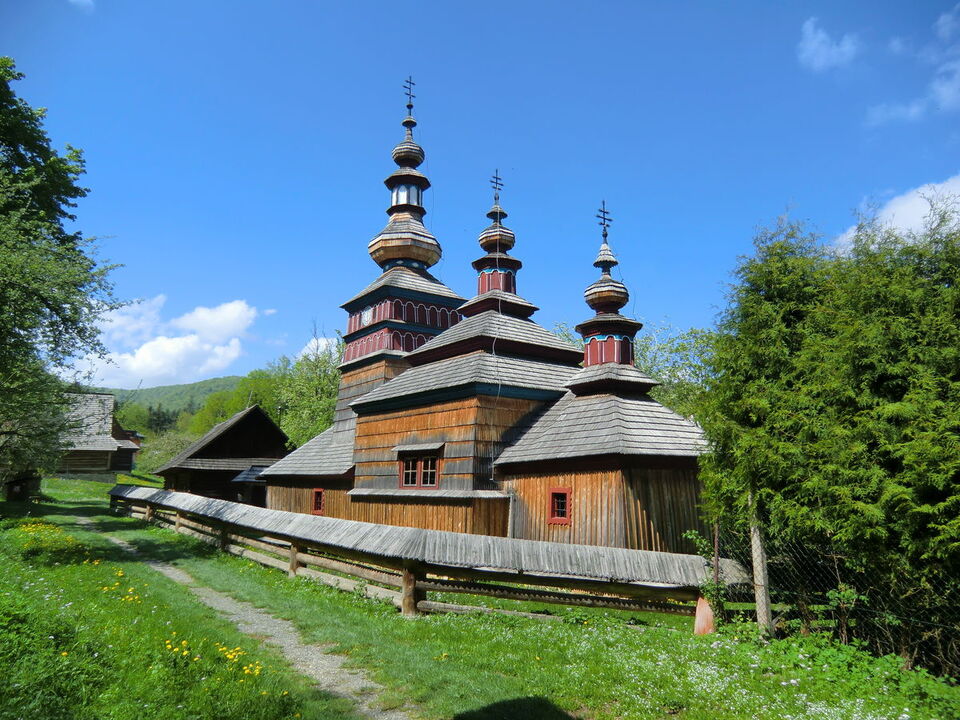
The Museum of Folk Architecture - Slovakia's oldest open-air museum - is located on the edge of the Bardejov Spa in north-eastern Slovakia. The museum's main sights include two wooden churches that were originally located in the village of Zboj (Orthodox) and the nearby village of Mikulášová (Greek-Catholic).
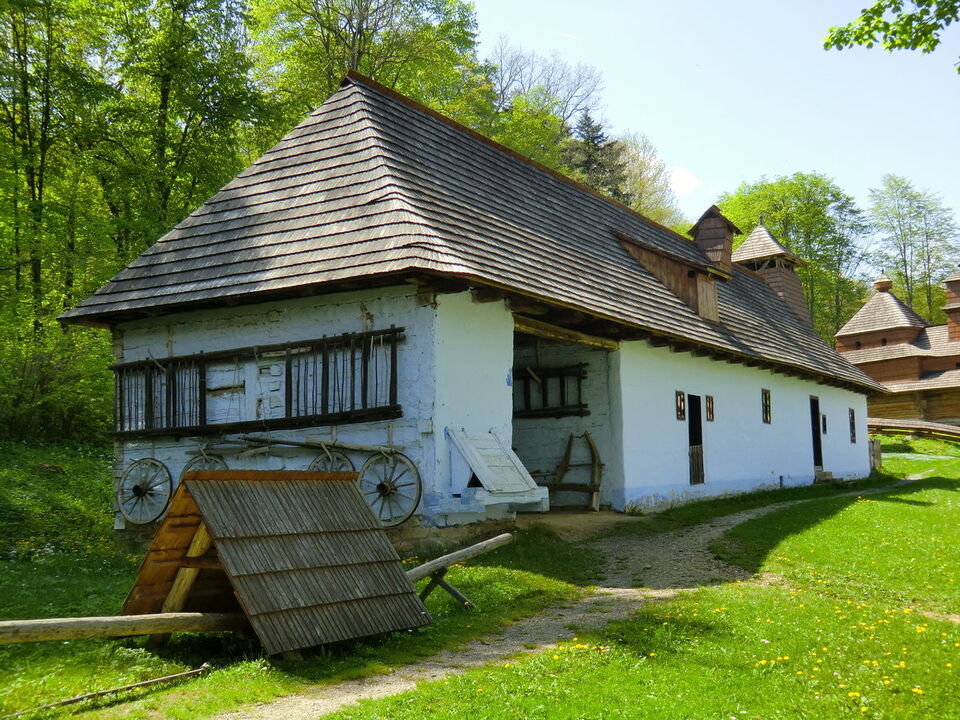
The first exposition of the open-air museum in Slovakia was opened to public in 1965 in spa of Bardejov. It currently consists of almost 30 buildings of traditional folk architecture from the Upper Šariš and north-eastern Zemplín regions.
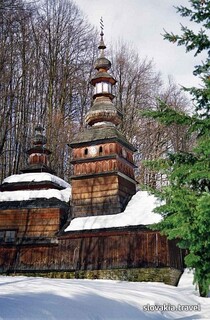
To the architectural dominant - the wooden church from the village Mikulášová-Niklová, another wooden church from Zboj was added. Both Greek-Catholic churches are unique examples of sacral architecture.
Apart from houses with stables, also structures with technical equipment- among themblacksmith workshop, fruit drying room, drilling mechanism driven by water and the fulling mill were placed here.
A visit to the museum is enlivened by organized events, such as the Day of Crafts, the Folklore Afternoon, the Potters' Sunday, the Tour of the Ruthenian and Šariš Folklores, etc.
Operation times unavailable.
Not far away from Bardejov in north-east of Slovakia are the ruins of the Castle Zborov, also called Makovica.
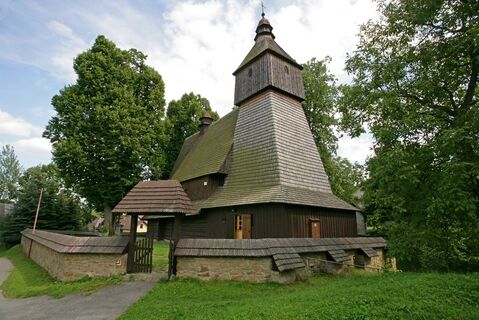
The Roman Catholic wooden Church of St Francis of Assisi (Kostol sv. Františka z Assisi) is in 2008, along with seven wooden churches of the Slovak part of Carpathian Mountain Area, it was included on the UNESCO Word Heritage List.
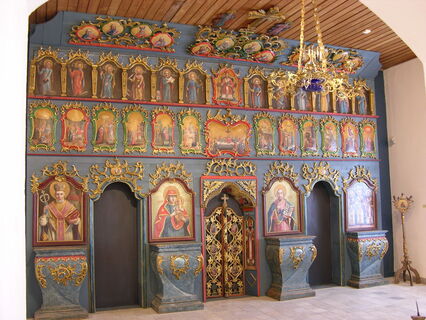
The Greek Catholic wooden church of St Cosmo and Damian from 1708 and 1709. It is the log structure consisting of three parts built on stone masonry. The architectural particularity of this church is the overhanging attic on pillars around the building. It is also the only church in Slovakia with a cellar. Baroque elements prevail in its interior. The majority of pieces in the iconostas are from the 18th century, but it also contains icons of the 16th and 17th centuries.
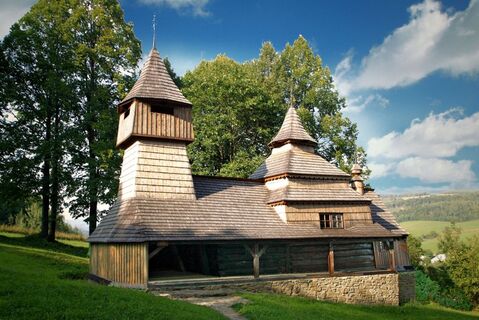
The Greek Catholic wooden church of St Michael the Archangel is from the 18th century. It is a log structure consisting of three parts. Parts of iconostas are from different periods. The lavishly ornamented tsar door is the part that attracts attention. Some pictures of the iconostas are from the 19th century. The icon of Pokrova is from the end of the 18th century. The altar dates to 1716.
Monuments of folk architecture of material and spiritual culture of Ukrainians and Ruthenians are concentrated in an open-air ethnographic exposition that can be seen above an amphitheatre in the town of Svidník in northeastern Slovakia. A wooden church from Nová Polianka (Mergeška) is the gem of the exposition.
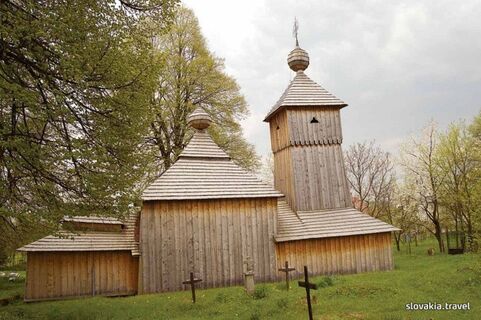
he Greek Catholic wooden church of St Paraskieva from 1705. It is a log building with three spaces and a new diagonal nave on tall stone masonry. The church was rebuilt in 1932 when it acquired the form as we know it now, with to lateral chapels. The church was reconstructed in 2002. Its Baroque interior and iconostas are from the mid-18th century. The iconostas with the subject of the New Testament, figures of Apostles, Prophets and other Saints was restored. More artistic and historic icons and objects complement the interior of the church.
The Greek Catholic wooden church of St Michael the Archangel (Chrám sv. Michala Archanjela) was included in 2008, along with seven wooden churches of the Slovak part of Carpathian Mountain Area, on the UNESCO Word Heritage List.