Hotel Zámok Topoľčianky
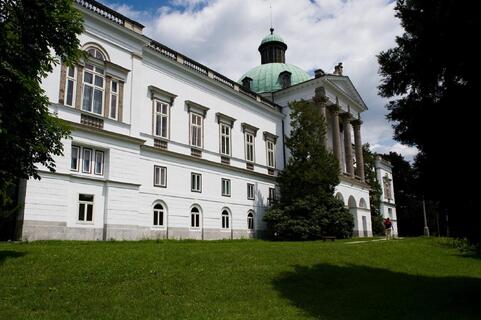
The village of Topoľčianky, which is located north of the western Slovak town of Zlaté Moravce at the foothill of the Tribeč Mountains, boasts an extensive English garden, which features a picturesque Classicist-style manor house that forms the southern wing of an old castle.
The area originally featured a Gothic-style water castle and later a Renaissance fortress. At the outset of the 19th century, the then owner of the castle Count Ján Keglevich pulled down the southern Renaissance tract of the castle built and replaced it with a Classicist one, which is considered one of the purest and most beautiful examples of architecture in the Classicist style in Slovakia.
In the past, the castle was used as a summer residence of the Habsburg royal house. After WWI, it also served as a summer residence of Czechoslovak presidents. It was at that time that the castle's three Renaissance-style wings underwent their latest thorough reconstruction. T. G. Masaryk, the first president of the Czechoslovak Republic, especially liked to relax and work in this place.
The Classicist tract was gradually turned into a museum. Today visitors can admire the library with more than 14,000 volumes, one of the few fully conserved Castle libraries in Slovakia. The interior and valuable historical furniture from the 16th to 19th centuries with splendid ornamentation and collections of porcelain and ceramics (one of the biggest in Slovakia) also deserve the visitor's attention.
| Monday | Closed |
|---|---|
| Tuesday – Friday | 09:00 – 14:00 |
| Saturday – Sunday | 12:00 – 15:00 |
Utorok-Piatok - vstupy o 9:00, 10:30, 12:30, 14:00 hod.
Sobota Nedeľa Sviatok- vstupy o 12:00, 13:30, 15:00 hod.
| Monday | 17:00 – 15:00 |
|---|---|
| Tuesday – Friday | 09:00 – 15:00 |
| Saturday – Sunday | 12:00 – 16:00 |
Utorok-Piatok - vstupy o 9:00, 10:00, 11:00, 13:00, 14:00, 15:00 hod.
Sobota, Nedeľa, Sviatok- vstupy o 12:00, 13:00, 14:00, 15:00, 16:00 hod.


Národný žrebčín Topolčianky patrí medzi svetovo najvýznamnejšie žrebčíny a možno ho právom zaradiť za kultúrne dedičstvo národa. Zameriavajú sa na chov 5. plemien koní, Slovenský teplokrvník, Hucul, Arab, Lipican a Nonius. Nachádza sa tu výcvikové centrum, hipologické múzeum a sú zaujímavý aj svojimi budovami, ktoré patria medzi hodnotné architektonické diela.
Château Topoľčianky is a wine manufacturer established in 1933 in the central part of the Danube plain in the south of the Slovak Republic.
There is only one place in Slovakia, hidden in beautiful oak forests surrounding the community of Topoľčianky, where one can see Europe´s largest mammal, the European bison, "a close relative" of more known, the North American buffalo.
Obnovený camping a reštaurácia Banský dvor na brehu nádrže Tajch je ideálnym miestom pre odstavenie karavanu, destský tábor, stanovačku aj chatovačku, ale aj pre motozraz či festival.
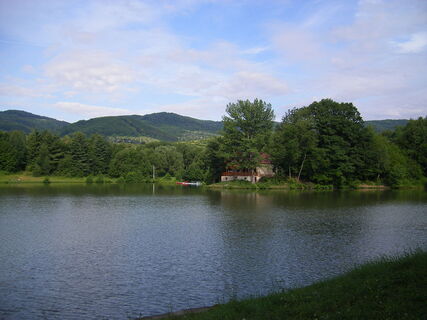
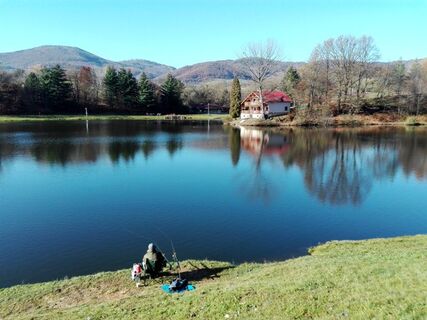
If you have already managed to visit the beautiful secrets in Banská Štiavnica, do not hesitate to visit the Tajch Nová baňa. In hot summers, it is possible to swim, but at your own risk.
Vodná nádrž Tajch – bola postavená severne od mesta Nová Baňa v r. 1792 – 1794 ako súčasť bývalého banského vodohospodárskeho systému.
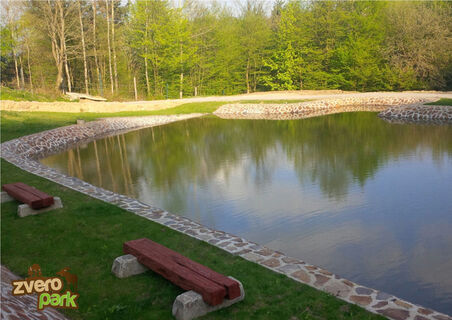
Visit the Animal Park in Revištské Podzámčie – a place with a fairy tale-like environment, exciting animals, a gurgling waterfall, a lake teeming with fish, and a meadow made for picnics and peaceful relaxation.
The Botanical garden in Nitra in western Slovakia is the scientific and pedagogic facility owned by the Slovak Agricultural University, focused on the cultural and educational activities.
Prírodná pamiatka Vyhniansky travertín je ojedinelým krasovým útvarom – živou, neustále rastúcou travertínovou kopou s viac ako 3 m vysokým vodopádom.
Château Topoľčianky is a wine manufacturer established in 1933 in the central part of the Danube plain in the south of the Slovak Republic.
Obnovený camping a reštaurácia Banský dvor na brehu nádrže Tajch je ideálnym miestom pre odstavenie karavanu, destský tábor, stanovačku aj chatovačku, ale aj pre motozraz či festival.
Rekreačné zariadenie a koliba RIEČKY sa nachádzajú v Kľakovskej doline, v dedinke Župkov.
AZUL Hotel & Restaurant offers accommodation in Partizánske. Guests can enjoy the on-site restaurant that is serving hot breakfast for extra charge. Guests can also enjoy local beers that can be tasted in the hotel brewery.
ObecČereňany belongs to villages lying in the southern part of Hornonitrian basin. The most important monument of the village (formerly belonging to the castle of Gray Stone) is the Church of Sts. Mária Magdalény, the water mill on the Žiarský stream and the fairy tale. Its history dates back to 1329. In the Middle Ages it served as a refugee with tattoos.
Štýlové ubytovacie zariadenie Drevenica Revište sa nachádza v tichom prostredí na okraji Revištského Podzámčia pri Žarnovici. Ponúka ubytovanie v apartmánoch, v kempingu, chutné tradičné jedlo a tiež slúži ako vodácka základňa vodákom splavujúcim rieku Hron. Dominantu nad areálom tvorí silueta hradu Revište. Pre odvážnych sú v ponuke lety na vírniku – gyrocoptere. Vzdialená je cca 4 km od mesta Žarnovica.
Situated in the historical centre of Levice town and a pedestrian zone reachable within a 5-minute walk, Hotel Golden Eagle offers en-suite accommodation, a restaurant, a bar, a sun terrace, a garden, a 24-hour front desk and free wellness facilities. Free WiFi is available in all areas.
Set in the heart of the ancient city of Nitra, 100 m from the pedestrian zone, Hotel Oko is close to many tourist attractions, such as St. Emmeram's Cathedral. It offers free Wi-Fi and free private parking.
Le Bistro je trendový podnik v centre starobylej Nitry. Hosťom ponúka francúzsky štýl raňajok, čerstvú kávu a výborné dezerty.
Vo Furmanskej kolibe v Bzenici si môžete vychutnať množstvo slovenských špecialít, ako je baraní guláš, halušky alebo vychýrená držková polievka. Koliba je ľahko dostupná aj z cesty R1 a je ideálnym miestom pre Vašu rodinnú oslavu.
Offering an indoor swimming pool, A wellness centre and a fitness room, Hotel Vion is located a 2-minute drive from the centre of Zlaté Moravce. It also provides free internet access and 2 tennis courts, including a covered winter court.
Hotel Eminent is situated 1 km from the centre of Zlaté Moravce and features free Wi-Fi access and an à-la-carte restaurant with international cuisine. The use of the on-site sauna is free of charge.
Obnovený camping a reštaurácia Banský dvor na brehu nádrže Tajch je ideálnym miestom pre odstavenie karavanu, destský tábor, stanovačku aj chatovačku, ale aj pre motozraz či festival.
Rekreačné zariadenie a koliba RIEČKY sa nachádzajú v Kľakovskej doline, v dedinke Župkov.
AZUL Hotel & Restaurant offers accommodation in Partizánske. Guests can enjoy the on-site restaurant that is serving hot breakfast for extra charge. Guests can also enjoy local beers that can be tasted in the hotel brewery.
ObecČereňany belongs to villages lying in the southern part of Hornonitrian basin. The most important monument of the village (formerly belonging to the castle of Gray Stone) is the Church of Sts. Mária Magdalény, the water mill on the Žiarský stream and the fairy tale. Its history dates back to 1329. In the Middle Ages it served as a refugee with tattoos.
Štýlové ubytovacie zariadenie Drevenica Revište sa nachádza v tichom prostredí na okraji Revištského Podzámčia pri Žarnovici. Ponúka ubytovanie v apartmánoch, v kempingu, chutné tradičné jedlo a tiež slúži ako vodácka základňa vodákom splavujúcim rieku Hron. Dominantu nad areálom tvorí silueta hradu Revište. Pre odvážnych sú v ponuke lety na vírniku – gyrocoptere. Vzdialená je cca 4 km od mesta Žarnovica.
Situated in the historical centre of Levice town and a pedestrian zone reachable within a 5-minute walk, Hotel Golden Eagle offers en-suite accommodation, a restaurant, a bar, a sun terrace, a garden, a 24-hour front desk and free wellness facilities. Free WiFi is available in all areas.
Set in the heart of the ancient city of Nitra, 100 m from the pedestrian zone, Hotel Oko is close to many tourist attractions, such as St. Emmeram's Cathedral. It offers free Wi-Fi and free private parking.
Termálne kúpele Malé Bielice sú súčasťou okresného mesta Partizánske a ponúkajú ideálne podmienky pre regeneráciu a relax. V priestoroch kúpeľov vyviera termálna minerálna voda s teplotou 43°C a má priaznivé účinky najmä na pohybové ústrojenstvo, nervovú sústavu, rehabilitáciu, regeneráciu organizmu a na choroby z povolania.
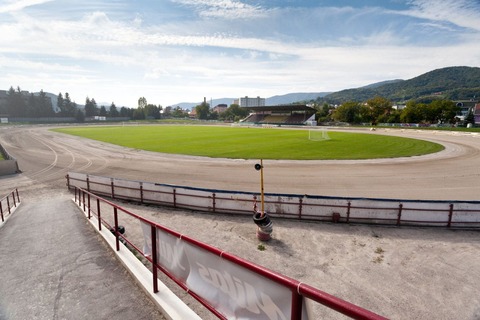
Dejiny žarnovickej plochej dráhy sa začali písať 29. a 30. augusta 1953, keď Základná organizácia Zväzarmu pri n. p. Preglejka zorganizovala 1. pohronskú plochú dráhu o Striebornú prilbu SNP.
Kúpalisko s celoročnou prevádzkou leží v peknom tichom prostredí, priamo v zeleni prírody pod Drieňovým vrchom pohoria Strážovská vrchovina.
In the magnificent countryside of the Štiavnica hills, where there used to be old spas, you can find the Vyhne Water Paradise thermal swimming-pool. It offers visitors fun, rest and comfort all year round in its healing thermal waters with a high iron content and a temperature of up to 36,5 °C.
A visit to the Hippology Museum in Topoľčianky will show you the world of horses and people. It is the only museum of this type in Slovakia.
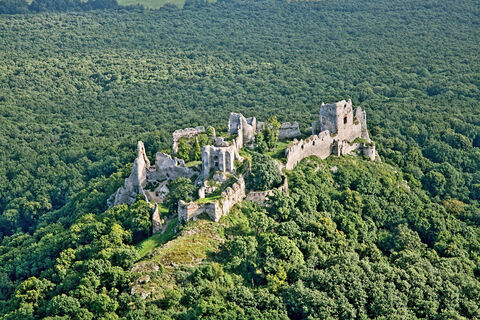
Several kilometres north of Topoľčianky in the Tribeč Mts. in west of Slovakia are the ruins of the Hrušov Castle towering on top of the Skalka Mt. at the height of 488 m.
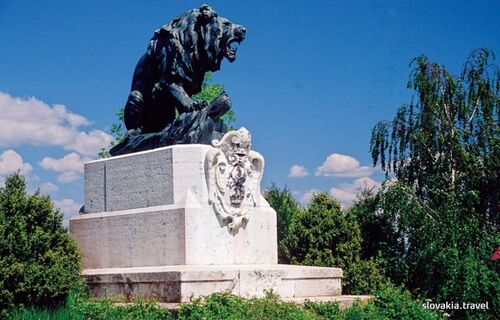
In the middle of the fields near Veľké Vozokany, not far from Zlaté Moravce in the sout-west of Slovakia, a bronze lion erects from a stone pedestal. It commemorates the battle between the Turkish and the Hungarian armies in 1652.
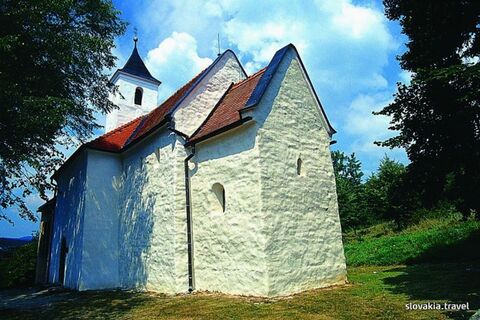
The exceptionally valuable pre-Romanesque church of St George from the 10th century demonstrates the rich history and culture of the region of Ponitrie. Its architecture is the oldest complete pre-Romanesque one in the territory of Slovakia. Its interior contains the remains of the Romanesque and Gothic wall paintings from the 11th century (the oldest in Slovakia) and the Romanesque stone baptistery.
A neoclassical manor house, which is located in an extensive and quiet park in the village of Beladice - Pustý Chotár a mere few kilometres outside Nitra, is home to an extraordinary gallery.
The bulky fortified Benedictine monastery, one of the oldest and most important architectural monuments of Slovakia, stands on the rocks above the village Hronský Beňadik south of Nová Baňa.
Above the village Jelenec in the Tribeč Mts. in west of Slovakia, at the height of 514 m there are ruins of the originally Gothic Gýmeš Castle, built in the second half of the 13th century on the site of an older fort.
The advantageous location on the way from Skýcova to Topoľčian and Trenčín contributed to the fact that in the 15th century the tower was chosen in the Tríbeč mountain range.
Pohronské Museum in Nová Baňa was established in 1952 as a Town Museum by the initiative of antiques collector Anton Solčiansky. The Museum documents historical development of Stredné Pohronie delimited by the territory of Žiar region. There are more than 12,000 items in its collection.
Dejiny žarnovickej plochej dráhy sa začali písať 29. a 30. augusta 1953, keď Základná organizácia Zväzarmu pri n. p. Preglejka zorganizovala 1. pohronskú plochú dráhu o Striebornú prilbu SNP.
ObecČereňany belongs to villages lying in the southern part of Hornonitrian basin. The most important monument of the village (formerly belonging to the castle of Gray Stone) is the Church of Sts. Mária Magdalény, the water mill on the Žiarský stream and the fairy tale. Its history dates back to 1329. In the Middle Ages it served as a refugee with tattoos.