Forester’s House

Museum & Gallery

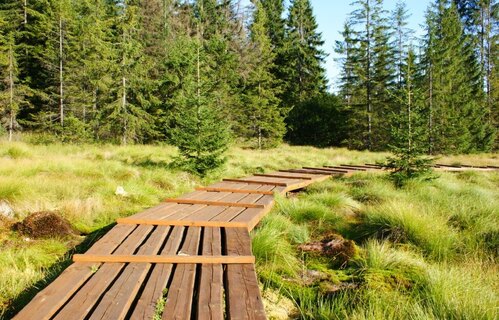
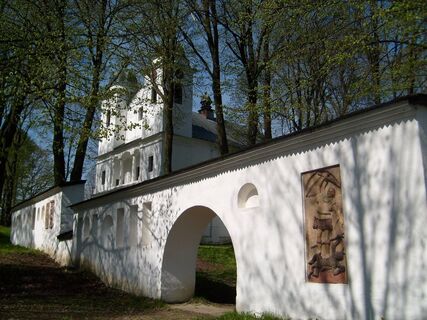
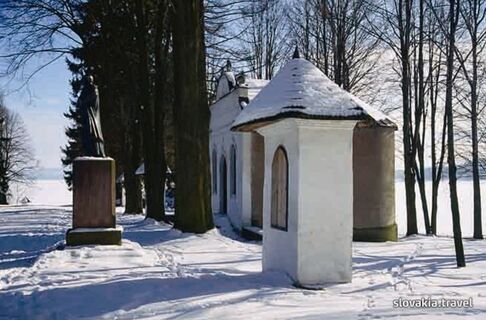
Under the majestic Babia Hora Mountain, the idyllic place of the Forester’s House with the exhibitions of two important figures of Slovak literature, is hiding. In the last but one decade of the 19th century, the poet Pavol Országh Hviezdoslav used to spend his time walking in these forests, searching for inspiration that resulted into his most influential work – ‘Forester’s Wife’. At the beginning of the 20th century, this place was where another important Slovak author Milo Urban was born.

The literary exhibition dedicated to ‘Forester’s Wife’ was opened in October of 1979 during the 25th annual Hviezdoslavov Kubín recitation competition. The Forester’s House was the first literary exhibition in Slovakia that was dedicated to one piece of work entirely. The exhibition aims to introduce the surroundings that inspired ‘Forester’s Wife’ and to follow the work from the very origin through its publishing to the following reflections in other forms of art.

Description:

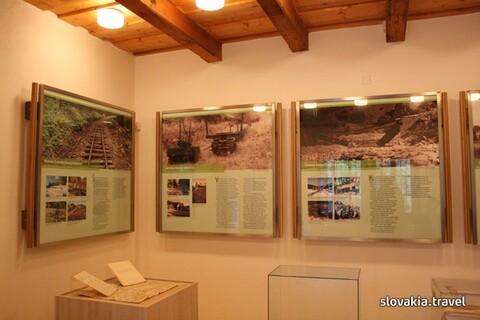
- The entrance room of the house stylizes the traditional living of a forester family. The following room personifies the work and its author through a study room with a working table and manuscripts. The infamous pelerine characteristic for Hviezdoslav’s dress, is also part of the room. The room is also decorated with the art protis pieces by the painter Eva Trizuljaková.

- The next room introduces ‘Forester’s Wife’ in printed form. It presents the first publishing of the work in Slovenské Pohľady and numerous re-editions and translations.

- The last room presents the reflections and references of ‘Forester’s Wife’ in other forms of art, from painting to drama and film. Several significant painters and illustrators, including Ľudovít Fulla or Martin Benka, reflected ‘Forester’s Wife’ in their own works. Multimedia presentation of Hviezdoslav’s work is also possible in here.

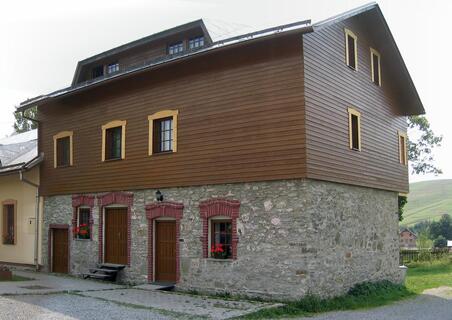
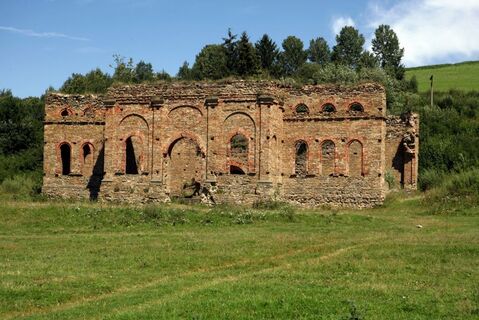
The original Forester’s House that was often visited by Hviezdoslav, burned down in 1912. Before the house was destroyed by the fire, the writer Milo Urban was born there in 1904. It is him whose work is presented in the nearby object in the area of the copy of the Forester’s House.

0
Loading map...
Hájovňa pod Babou Horou 029 47Oravská Polhora
Show Navigation

Operation Times

AprilSeptember
MondayClosed
Tuesday – Friday09:3016:30
Saturday – Sunday10:0017:00

Due to the lack of an internet connection, only a telephone reservation is possible.

October
MondayClosed
Tuesday – Sunday09:3015:30

Due to the lack of an internet connection, only a telephone reservation is possible.

Weather Forecast

Moderate rain icon
Moderate rain
16°C/ 9°CDay / Night
Light breeze, 3m/s
Northwest
Light rain icon
Light rain
17°C/ 7°CDay / Night
Gentle breeze, 3m/s
West
Light rain icon
Light rain
16°C/ 6°CDay / Night
Gentle breeze, 4m/s
Southwest
Light rain icon
Light rain
19°C/ 8°CDay / Night
Moderate breeze, 6m/s
West
Overcast clouds icon
Overcast clouds
16°C/ 6°CDay / Night
Gentle breeze, 4m/s
Northwest
Scattered clouds icon
Scattered clouds
19°C/ 6°CDay / Night
Light breeze, 3m/s
North
Scattered clouds icon
Scattered clouds
23°C/ 8°CDay / Night
Gentle breeze, 4m/s
Southwest

Places Around

Orava (dam)

Orava (dam)

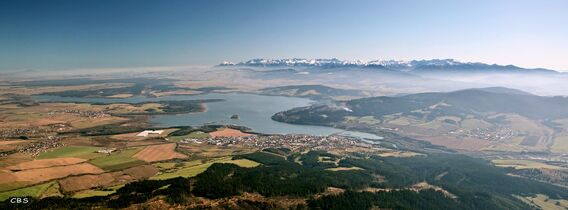
The water reservoir Orava is the result of artificial blocking of the river Orava in northern Slovakia as the remedy to frequent floods. It spreads as far as the Polish frontier. There is an island in the middle of the reservoir called Slanický ostrov – the favourite destinations of trippers.

Slanica Island of Art

Slanica Island of Art

Permanent expositions of the traditional folk art from the collections of the Orava Gallery (Oravská galéria) have been located in the beautiful natural scenery of Slanica Island of Art, in the centre of the Oravská priehrada dam.

The memorial of Anton Bernolák (Slanický ostrov)

The memorial of Anton Bernolák (Slanický ostrov)

The birthplace of the first man to codify the literary Slovak - Anton Bernolák -disappeared under the level of the Oravská priehrada dam. A church was the only building to remain of the village. It stands on the Slanický ostrov island. A memorial was built there to commemorate its famous native.

Tvrdošín – All Saints church

The pride of Tvrdošín and its oldest preserved building is the Gothic wooden Roman-Catholic All Saints church (Kostol Všetkých svätých) situated in the local cemetery. In 2008, along with seven wooden churches of the Slovak part of Carpathian Mountain Area, it was included on the UNESCO Word Heritage List.

Podbiel

PODBIEL is a typical village lying in the region of Orava (north of Slovakia) with interesting compound of original log houses called Bobrova rala built in the 19th and early 20th centuries.

The smelting plant Františkova huta

The smelting plant Františkova huta

In the vicinity of the distinctive village of Podbiel, with its unique complex of folk-architecture buildings, located in the region surrounding the Orava dam, we can find the precious technical monument Františkova huta (Francis’s Smelting Plant).

Exposition of the Orava Logging Railway

Exposition of the Orava Logging Railway

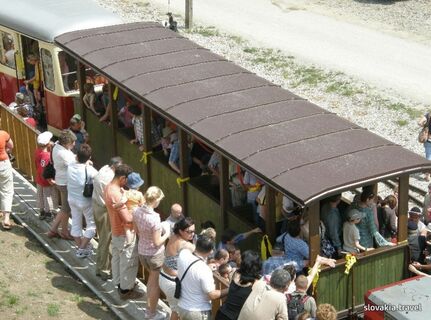
The Orava Museum established the exposition of the Orava Logging Railway and the Orava Co-ownership Association in the reconstructed premises of the service building and it will be pleased to welcome anybody coming to this beautiful part of Slovakia to spend their time in a pleasant manner and to have some new experience.

Orava Logging Railway

Orava Logging Railway

In practice, the logging railway in Oravská Lesná in Orava was not only cheaper with respect to the construction and operation, compared to the conventional railways, but it also could cope with a very rugged terrain. Nowadays, it is not used for the original purpose – the transport of timber, but it serves as an attraction of the Orava Museum.