GO Kľačno
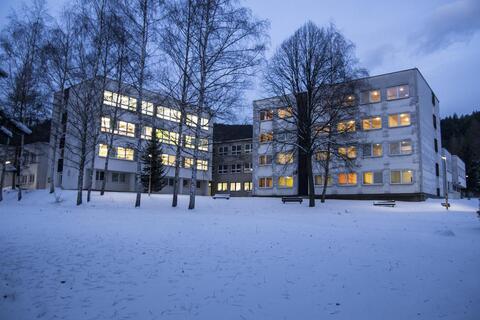
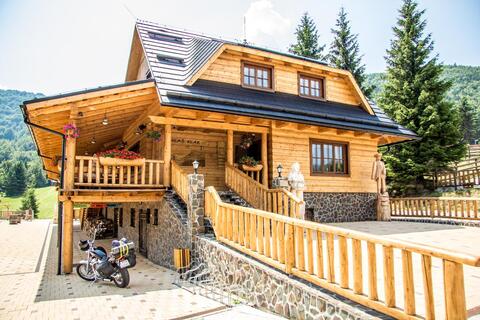
The Green Rose project is the realization of young people with the help of old and proven ideas. Together we have created accommodation for 15 people and a farm with animals.
The Green Rose project is the realization of young people with the help of old and proven ideas. Together we have created accommodation for 15 people and a farm with animals.
A group of young enthusiasts, with the help of experts from various industries, will try to show the world how even today, a large number of things can be realized using classical practices and especially in accordance with nature, with minimal impact on the environment.
We will prepare a tailor-made offer within 24 hours on weekdays from 8AM to 16PM.






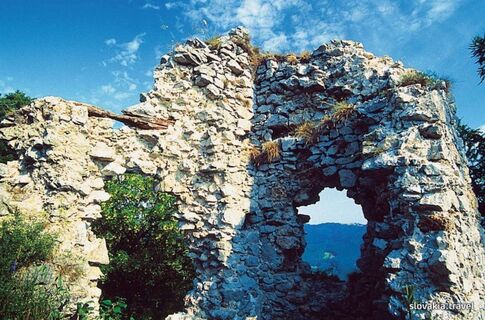
HRADISKO The saddle beneath Vyšehrad was a strategic passage from Ponitria to Turca , already used in the beginnings of the settlement of Slovakia . The traces of settlement can be traced back to the hard-to-reach hill of Vyšehrad from the early Stone Age . Significant traces are associated with the Bronze Age and the people of the Lusatian culture (1200-700 BC) as well as with the later Iron Age (750 BC), from which many finds were found. The most important role was played by the fortification during the period of Great Moravia, when it was the center of the region . The settlement of the territory to the north required the construction of fortified sites, from which the power of Ponitria to Turca, Orava or Liptov was expanded. The defensive and commercial function of the Upper Castle gradually took over the surrounding settlements and after the demise of the Great Moravia its significance dropped. CASTLE VYŠEHRAD In the 13th century , the first written reports of Vyšehrad , which managed the Diviack family, appeared. Since 1277, it is reported that after the Mongol invasion, Vyšehrad was remembered only as a former castle . In the 15th century , part of the brothers, persecuted by the royal troops, resorted to Vyšehrad. From this period, finds of weapons , various iron objects , components of horse harnesses , corners , and especially coins are coming . NPR VYŠEHRAD The territory at the top is part of Vysehrad NPR. Vyšehrad is a national nature reserve since 1973 . A territory with the 4th degree of protection covers the top part of Vyšehrad and a large part of the western foothill with an area of more than 48 hectares. The object of the protection is the Vyšehrad limestone massif with forest vegetation and rare species of insects .
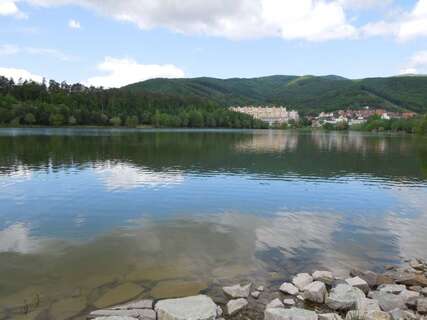
The dominant feature of the village Kanianka is a large water reservoir, also called Kanianska dam. It is located in a charming environment, right in the heart of the picturesque Upper Nitra nature. Kanianka Reservoir is a popular recreational place that is popular with tourists and visitors from near and far.
In the shadow of slender agates and pine trees, the privacy of lovers searches for privacy. The hand in hand passes through the tortuous sidewalks, separating them for a moment and rejoining them. Standing in a hug on a wooden bench, the charming children are watching on the playground. In the silence of the unobtrusive gazebo, the first moments of the night come. The poetry of romantic films is left in the forest amphitheater. From here it is only a piece of the silver lookout, where, under her balcony "Rómeo", she knows the love of her "Julia".
The Bojnice lookout tower is an unmissable building located in the mountains above the town of Bojnice, providing an unforgettable view.
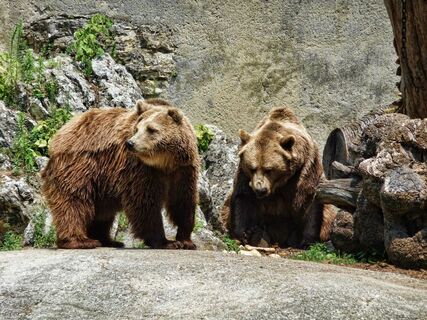
The zoological garden in the spa town of Bojnice, which straddles western and central Slovakia, is the country's oldest and most visited zoo. It lies in a beautiful natural setting that surrounds the Bojnice Castle.
The visit to the Bojnice Castle includes that of a natural cave located in the tufaceous accumulation on which the castle is built. The diameter of the cave is 22 m and its height is 6 m. It is located 26-m below the level of the fourth courtyard with a water well.
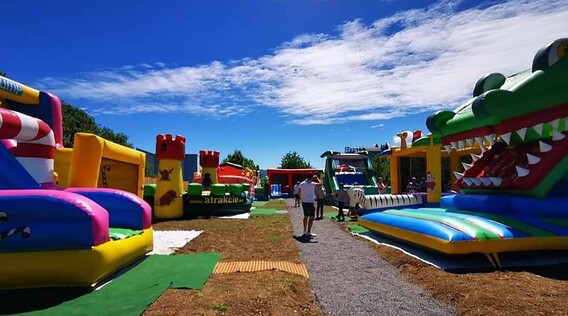
Gumi land in Bojnice is a small amusement park full of inflatable attractions, where you can go crazy and be guaranteed to tire your children.
If you prefer adventures in a tent , cottages or caravan , take advantage of caravan services in the locality below Bojnice Castle . The campsite is situated in a beautiful natural environment above the chalet on the way from Bojnice to Nitrianske Rudno.
The National Park of Veľká Fatra, lying in central Slovakia is typical for its continuous forest, long valleys and the largest locality of original yew tree occurrence in Europe.
Reštaurácia Salaš Kľak sa nachádza vo Fačkovskom sedle s pekným výhľadom na dominantu regiónu - najvyšší vrch Kľak (1351 m n.m.) v príjemnom prostredí okolitej prírody. Kuchyňa je zameraná na ponuku tradičných slovenských jedál.
Featuring free WiFi and a sun terrace, Horský Hotel Kľak offers pet-friendly accommodation in Kľačno. The hotel has ski-to-door access and a ski school, and guests can enjoy a meal at the restaurant. Free private parking is available on site.
Restaurant and accommodation. Active relaxation in a pleasant environment near the spa town of Bojnice.
PENSION AND RUDOLF RESTAURANT are situated 3 km from Prievidza and 5 km from the spa town of Bojnice , on the main road to Martin, Žilina, Turcianske Teplice. We strive to provide you with a cozy, comfortable accommodation environment where you can well have a meal, spend some pleasant moments and relax, be it managers, business travelers or families with children.
Do not hesitate to visit Koliba Pacho . We have a lot of specialties prepared for you , children 's playground with attractions . Get an invitation to spend a nice weekend as well as accommodation and adrenaline experiences , offered only by Koliba Pacho. You can find us at the village of Veľká Čausa on the Prievidza - Handlová route , near the Bojníc and the Remata recreation area.
MERIDIANA in Bojnice is a unique restaurant that combines great space, minimalist design, natural materials, relaxing atmosphere, modern technology and professionalism in one of the most impressive experiences.
Restaurant is a part of the BEST WESTERN Hotel Belassi PLUS ****, located in the vicinity of the romantic jewel of Europe – the fabulous Bojnice castle. High-quality mediterranean and international cuisine dishes are prepared from fresh ingredients.
WOODSTOCK, that's the Original Pub Culture WOODSTOCK in Bojnice is a true authentic pub with everything to do with it. Quality offer of beers , alcoholic and non-alcoholic drinks and, of course, appetizers like pickled hermelin and many others. Just because today , under the influence of multinational corporations, the tradition and the well-established practices of beer are put in a hurry , we started to search for breweries and suppliers , which still depend on beer, and we offer something special every week that can not be done So regularly buy in shops or squash in pubs ....
Autentický kubánsky bar v historickej časti mestečko Bojnice s veľkým výberom kvalitného alkoholu a cigár.
Hotel Lipa *** is located in the center of Bojnice, near the famous and beautiful Bojnice Chateau, the zoo and the Čajka swimming pool.
PENSION JOHANKA is a restored 18th-century mansion right in the center of Nitrianske Pravno
Hotel Vysehrad is located in the beautiful lone nature of Upper Nitra in the village Nitrianske Pravno on the main road Prievidza - Martin, Prievidza - Žilina.
Featuring free WiFi and a sun terrace, Horský Hotel Kľak offers pet-friendly accommodation in Kľačno. The hotel has ski-to-door access and a ski school, and guests can enjoy a meal at the restaurant. Free private parking is available on site.
Pension POD LIPAMI is located in the Horná Nitra region, in the village of Nitrianske Pravno - Malinová in the Prievidza district. Just to jump from us you have it in the famous Bojnice, where you can visit Bojnice Castle, ZOO, spa and swimming pool Čajka.
Chalet Daniel is situated in a quiet environment of Strážovské vrchy in the village of Chvojnica near Bojnice and the district town of Prievidza . Directly across the chalet a mountain climbs the mountain , which completes the true holiday atmosphere.
We warmly welcome you to the profile of the Magura Mountain Hotel ***, which is located in the picturesque valley of the Strážovska Highlands, surrounded by Tužinská, Rudnianská and Chvojnická valley. The hotel is located 26 km from Prievidza and 35 km from Martin. The area lies in a moderate zone at an altitude of 618 m where the average annual temperature is 8 ° C and the continuous snow cover is 80 to 120 days a year. It is the perfect place to spend an extended weekend, winter or summer family holiday, for nature schools, summer camps, for stays of active athletes, as well as for corporate conferences and teambuilding.
Cottage MIMA is a newly built holiday cottage with a convenient location , on the outskirts of the village of Poruba , near Prievidza. The building is separate with cozy and nice furnishings , tidy in natural style . Accommodation is suitable and preferred for families with children. The capacity is 10 beds (2x 2-bed and 2x 3-bed room).
Restaurant and accommodation. Active relaxation in a pleasant environment near the spa town of Bojnice.
PENSION AND RUDOLF RESTAURANT are situated 3 km from Prievidza and 5 km from the spa town of Bojnice , on the main road to Martin, Žilina, Turcianske Teplice. We strive to provide you with a cozy, comfortable accommodation environment where you can well have a meal, spend some pleasant moments and relax, be it managers, business travelers or families with children.
Do not hesitate to visit Koliba Pacho . We have a lot of specialties prepared for you , children 's playground with attractions . Get an invitation to spend a nice weekend as well as accommodation and adrenaline experiences , offered only by Koliba Pacho. You can find us at the village of Veľká Čausa on the Prievidza - Handlová route , near the Bojníc and the Remata recreation area.
Hotel Lipa *** is located in the center of Bojnice, near the famous and beautiful Bojnice Chateau, the zoo and the Čajka swimming pool.
The Bojnice Cultural Center provides accommodation in the Bojnice City Library in a quiet environment right in the city center , 68 Hurbanovo náměstí 68 , in the building - cultural monument , with a separate entrance from the post office. The accommodation is on the ground floor and consists of a double room with the possibility of an extra bed , a bathroom with a shower and for the motorists and corridors. There is a TV , fridge , microwave and electric kettle . Parking is possible in the courtyard free of charge .
The new treatment house LYSEC is built in close proximity to the spa house Mier in the beautiful surroundings of Bojnice spa.
Spa house Slávia - spa Bojnice is a pension of category I 1 and 2 - bedded rooms in the beautiful surroundings of Bojnice spa. The guest house is located about 50 m from the central building of LD Mier , where healing treatments and meals are provided.
Medical center - Hotel MIER - Bojnice is located directly in the center of Bojnice spa in beautiful surroundings. The hotel benefits from treatment with procedures directly at the hotel. The hotel has one outdoor swimming pool with thermal water and three indoor pools with thermal water. All pools are in operation throughout the year.
Spa house ZOBOR - located directly in the beautiful spa area of Bojnice spa , the guesthouse is 100 m away from the LD Mier central building where procedures and meals are provided.
Spa house - Pension Klak is located directly in the beautiful spa area of Bojnicke spa, just 50 m from the central LD Mier building, where procedures and meals are provided.
Termálne kúpalisko Vieska ponúka 50x25 metrový plavecký bazén, detský bazén a tobogány. Súčasťou areálu kúpaliska je mutlifunkčné ihrisko, lezecká stena, minigolf, futbal, tenis, petanque, volejbal, basketbal a nohejbal. Teplota vody dosahuje 26 - 27 °C.
The Spa & Aquapark resort is in a beautiful aqua park, in the centre of Turčianske Teplice. It has two parts: ‘SPA‘ area (healing thermal water, 38 °C) and AQUAPARK area (thermal water up to 33 °C). Both are open throughout the year.
The centre of the southern part of Turiec is the spa Turčianske Teplice. The local hot springs were first mentioned in the 13th century. The legend has that King Sigismund of Luxembourg bathed in local springs in 1423. The town of Kremnica acquired the land with springs in 1532 and invested in construction of the first spa buildings. The spa was especially popular and visited in time of wars with the Habsburgs when the noble rebels used it as a refuge.
Bojnické námestie skrýva neodhalené tajomstvo dávneho alchymistu. Skúste ho odhaliť!
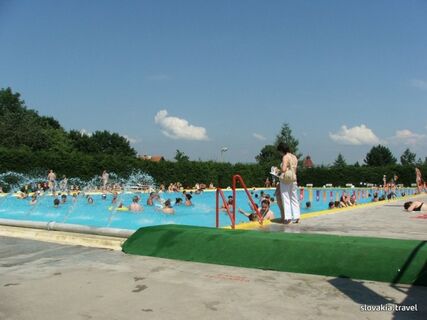
Bojnice located open air summer thermal pool Čajka in a beautiful scenery under fabulous Bojnice Castle and near the zoo and spa offers thermal water of 26 to 33 °C in 5 swimming pools (50 metres x 2.5 metres, 2 for children and 2 new stainless steel swimming pools) during its season.
The new treatment house LYSEC is built in close proximity to the spa house Mier in the beautiful surroundings of Bojnice spa.
Spa house Slávia - spa Bojnice is a pension of category I 1 and 2 - bedded rooms in the beautiful surroundings of Bojnice spa. The guest house is located about 50 m from the central building of LD Mier , where healing treatments and meals are provided.
Medical center - Hotel MIER - Bojnice is located directly in the center of Bojnice spa in beautiful surroundings. The hotel benefits from treatment with procedures directly at the hotel. The hotel has one outdoor swimming pool with thermal water and three indoor pools with thermal water. All pools are in operation throughout the year.
Spa house ZOBOR - located directly in the beautiful spa area of Bojnice spa , the guesthouse is 100 m away from the LD Mier central building where procedures and meals are provided.
Spa house - Pension Klak is located directly in the beautiful spa area of Bojnicke spa, just 50 m from the central LD Mier building, where procedures and meals are provided.
Vyšehradnian rarity with EUROPA NOSTRA On the way through Vyšehradná , on the Prievidza - Martin route, stop at the unique reconstructed national cultural monument of our folk architecture - a folk house with a ceramic workshop. In house no. 898 is a small museum of living, traditional clothing and ceramics workshop / Haronika Ceramics /. The house belongs to the ceramic maker Rastislav Haronik . The reconstruction of the house lasted for nearly 20 years . In 1993, for the rescue of this building, he won the Europa Nostra Award awarded by the Danish prince . There was a private museum in the house. There is a collection of ceramic vessels , but also various folk art objects from metal, wood, leather or textiles. The owner also has a collection of old costumes he can repair himself.
If you go from Prievidza to Martin or vice versa, stop at Vyšehrad to see the unique preserved monument - a wooden bell.
The southeastern part of the square in Nitrianske Pravne closes the largest building - the Roman Catholic Church of the Church of the Martyrs' Ján Kstiteľa. His patron, St. John the Baptist , was a coat of arms of the city and part of the decoration of the city seal for many centuries .
The Christian Calvary on the Galgensberg Hill is a unique collection of 27 neo-gothic neoclassical buildings. You can find it between Nitriansky Pravny (formerly German Pravno, Deutsch-Proben ) and the local part of Solka .
Nitrianske Pravno je mesto s nemeckou tradíciou, trvajúcou po generácie až do obdobia vysídlenia po II. sv. vojne. Pôvodný názov je Nemecké Pravno, Deutsch-Proben.
HRADISKO The saddle beneath Vyšehrad was a strategic passage from Ponitria to Turca , already used in the beginnings of the settlement of Slovakia . The traces of settlement can be traced back to the hard-to-reach hill of Vyšehrad from the early Stone Age . Significant traces are associated with the Bronze Age and the people of the Lusatian culture (1200-700 BC) as well as with the later Iron Age (750 BC), from which many finds were found. The most important role was played by the fortification during the period of Great Moravia, when it was the center of the region . The settlement of the territory to the north required the construction of fortified sites, from which the power of Ponitria to Turca, Orava or Liptov was expanded. The defensive and commercial function of the Upper Castle gradually took over the surrounding settlements and after the demise of the Great Moravia its significance dropped. CASTLE VYŠEHRAD In the 13th century , the first written reports of Vyšehrad , which managed the Diviack family, appeared. Since 1277, it is reported that after the Mongol invasion, Vyšehrad was remembered only as a former castle . In the 15th century , part of the brothers, persecuted by the royal troops, resorted to Vyšehrad. From this period, finds of weapons , various iron objects , components of horse harnesses , corners , and especially coins are coming . NPR VYŠEHRAD The territory at the top is part of Vysehrad NPR. Vyšehrad is a national nature reserve since 1973 . A territory with the 4th degree of protection covers the top part of Vyšehrad and a large part of the western foothill with an area of more than 48 hectares. The object of the protection is the Vyšehrad limestone massif with forest vegetation and rare species of insects .
High above the village Kláštor pod Znievom in the Malá Fatra Mts. raise the ruins of the Zniev Castle. It is the second highest situated castle in Slovakia (985 m).
The typical village ČIČMANY surrounded by the mountains Strážovské vrchy and Malá Fatra in the southern part of the valley Rajecká dolina is famous for its original log houses with the typical white ornamentation.
In the shadow of slender agates and pine trees, the privacy of lovers searches for privacy. The hand in hand passes through the tortuous sidewalks, separating them for a moment and rejoining them. Standing in a hug on a wooden bench, the charming children are watching on the playground. In the silence of the unobtrusive gazebo, the first moments of the night come. The poetry of romantic films is left in the forest amphitheater. From here it is only a piece of the silver lookout, where, under her balcony "Rómeo", she knows the love of her "Julia".
The Bojnice Cultural Center provides accommodation in the Bojnice City Library in a quiet environment right in the city center , 68 Hurbanovo náměstí 68 , in the building - cultural monument , with a separate entrance from the post office. The accommodation is on the ground floor and consists of a double room with the possibility of an extra bed , a bathroom with a shower and for the motorists and corridors. There is a TV , fridge , microwave and electric kettle . Parking is possible in the courtyard free of charge .