Harmanecká jaskyňa cave
The Harmanecká jaskyňa cave is situated in the Veľká Fatra Mts. The cave is known for occurrence of rare white soft sinter, tall pagodas and sinter lakes.
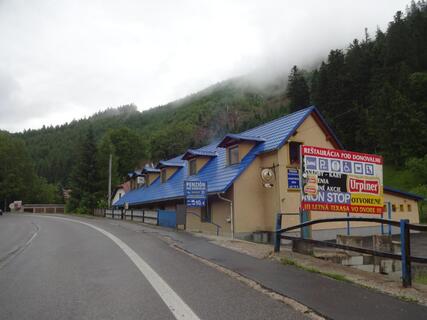
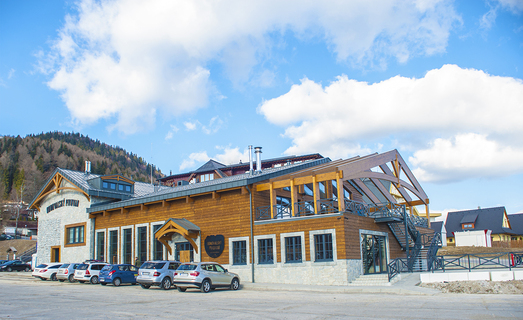
Čierna Ovca sa nachádza na rozhraní Veľkej Fatry a Kremnických vrchov v bezprostrednej blízkosti sviežeho horského potoka. Jedinečnosť tohto prostredia znásobuje prítomnosť Harmaneckej jaskyne, ktorej návšteva začína aj končí, práve u nás. A preto doprajte kulinársky zážitok svojmu telu, v krásnom prostredí Národného parku Veľká Fatra.
Vitajte
Je nám potešením, že Čierna Ovca sa stane obľúbeným miestom vašich zastávok, stretnutí s priateľmi, rodinou a obchodnými partnermi, kde vám bude nie len chutiť, ale budete sa u nás aj dobre cítiť.
Umiestnenie Čiernej Ovce, atraktívne priestory a profesionálne služby vám prinesú neopakovateľné a príjemné chvíle strávené u nás.
Pripravujeme pre vás jedlá domácej, českej a obľúbené jedlá medzinárodnej kuchyne, pripravené z tých najlepších surovín.
Team reštaurácie Čierna Ovca
| Monday – Sunday | 10:00 – 21:00 |
|---|


The Harmanecká jaskyňa cave is situated in the Veľká Fatra Mts. The cave is known for occurrence of rare white soft sinter, tall pagodas and sinter lakes.
Králická gorge is a beautiful gorge in the unique nature in the Kremnické hills. An easy walk in the gorge, ending with Králický waterfall, but what more could you want?
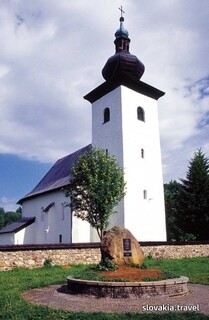
In a beautiful place near Kremnické Bane, central Slovakia, a stone is erected next to an ancient church of John Baptist. It reminds the passers-by that it is exactly here that the geographical centre of Europe is situated.
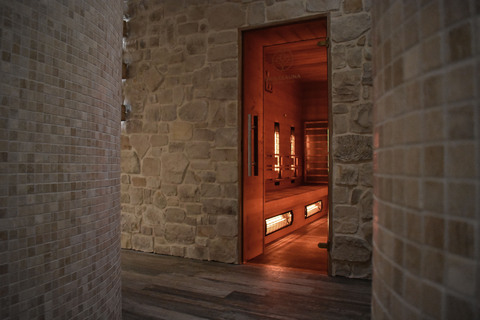
We want you to feel great with us, which is why we have created a place for your moments of relaxation and well-being thanks to the use of natural materials. Stone, wood and warm tones will create the right atmosphere for your relaxation. Trees have always given people energy and strength. That's why wood has a story in our wellness center. He is 138 years old and thus creates an environment full of positive energy. You can release harmful substances from the body in our saunas. INFRASAUNA is equipped with the most modern infrared radiators, which have incredible regenerative and healing effects for your body, joints and muscles. SALT STEAM and EUCALYPTE SAUNA relax and cleanse the respiratory tract and lungs and have an excellent detoxifying effect on the whole organism. FINNISH SAUNA, a popular classic, is an integral part of the wellness center. After the sauna, you will be perfectly refreshed by the COOLING POOL with a waterfall. A RELAXING ROOM with a starry sky will give you a feeling of peace. The dominant feature of our wellness center is a spacious WHIRLPOOL for relaxing and regenerating muscles and joints thanks to massage jets. Entrance to the wellness center only from 15 years.
The primeval forest of Badínsky prales, with its rare primary fir and beech habitat almost untouched by human activity, is one of the oldest protected areas in Slovakia. It was visited by Prince Charles in 2000.
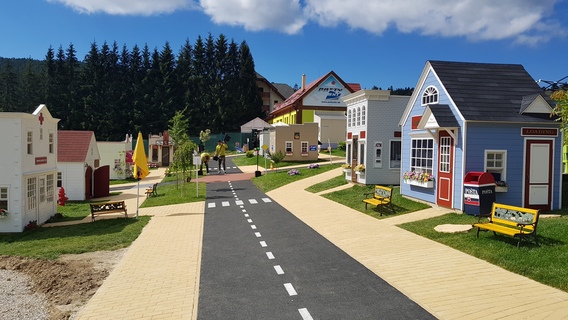
Do you know, what you want to be, when you grow up? Don’t wait until you grow up. Come to Donovalkovo, the capital city of children, and you can become a firefighter, policeman, banker, car racer, doctor and a lot more.
Kremnica, the town situated in central Slovakia in Kremnické vrchy mountains won an attribute of the Golden Town. Gold was mined in its environs for centuries. It was also in Kremnica where golden coins were struck using the metal of the local ore. The mining past of Kremnica is witnessed to by several technical monuments.
Situation of the village Blatnica next to the Gaderská dolina and Blatnická dolina valleys makes of it an ideal salient point for the trips to the spectacular valleys of the Veľká Fatra Mts.
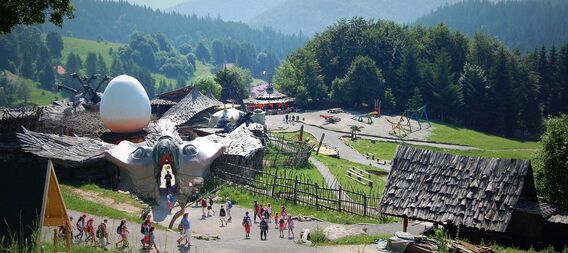
We invite all those who want to experience the atmosphere of Slovak folk tales to our non-traditional village, which consists of houses in the style of folk-fantasy architecture.
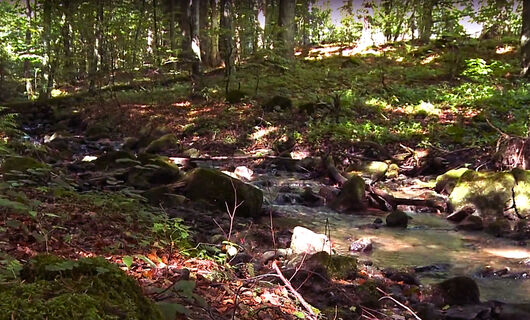
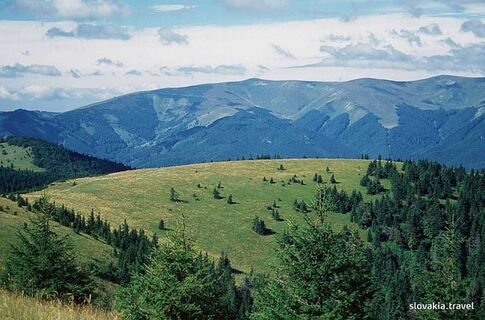
The National Park of Veľká Fatra, lying in central Slovakia is typical for its continuous forest, long valleys and the largest locality of original yew tree occurrence in Europe.
Vitajte v srdci Stredného Slovenska, Vitajte v Banskej bystrici, Vitajte v Plzenskej reštaurácii...
Leroy Bar & Café nie je len podnik, kde si môžete dať kvalitnú kávu, ale aj miesto, kde si môžete prísť oddýchnuť od každodenného zhonu. Snažíme sa, aby ste sa u nás cítili príjemne a po každej návšteve sa chceli ku nám znovu vrátiť.
Donovalský pivovar sa zrodil v krásnych, no drsných horách stredného Slovenska. Jeho život sa začal našim odvážnym a pritom tak prostým odhodlaním: už od počiatku variť poctivé pivo. Náš unikátny pivovar okrem útulnej reštaurácie ponúka aj čerstvé pekárenské výrobky z vlastnej pekárne a útulnú kaviareň. Milovníkom hôr prinášame osobitú skupinu pív, z ktorej je každé jedno výnimočné.
Do not hesitate to visit Koliba Pacho . We have a lot of specialties prepared for you , children 's playground with attractions . Get an invitation to spend a nice weekend as well as accommodation and adrenaline experiences , offered only by Koliba Pacho. You can find us at the village of Veľká Čausa on the Prievidza - Handlová route , near the Bojníc and the Remata recreation area.
PENSION AND RUDOLF RESTAURANT are situated 3 km from Prievidza and 5 km from the spa town of Bojnice , on the main road to Martin, Žilina, Turcianske Teplice. We strive to provide you with a cozy, comfortable accommodation environment where you can well have a meal, spend some pleasant moments and relax, be it managers, business travelers or families with children.
Located in Staré Hory, Penzión Staré Hory offers a garden and free WiFi. Among the various facilities are a terrace and ski storage space. Guests can have a drink at the bar.
Do not hesitate to visit Koliba Pacho . We have a lot of specialties prepared for you , children 's playground with attractions . Get an invitation to spend a nice weekend as well as accommodation and adrenaline experiences , offered only by Koliba Pacho. You can find us at the village of Veľká Čausa on the Prievidza - Handlová route , near the Bojníc and the Remata recreation area.
PENSION AND RUDOLF RESTAURANT are situated 3 km from Prievidza and 5 km from the spa town of Bojnice , on the main road to Martin, Žilina, Turcianske Teplice. We strive to provide you with a cozy, comfortable accommodation environment where you can well have a meal, spend some pleasant moments and relax, be it managers, business travelers or families with children.
Náučná zaistená cesta (via ferrata) Komín sa nachádza v Kremnických vrchoch v podcelku Flochovský chrbát.
The centre of the southern part of Turiec is the spa Turčianske Teplice. The local hot springs were first mentioned in the 13th century. The legend has that King Sigismund of Luxembourg bathed in local springs in 1423. The town of Kremnica acquired the land with springs in 1532 and invested in construction of the first spa buildings. The spa was especially popular and visited in time of wars with the Habsburgs when the noble rebels used it as a refuge.
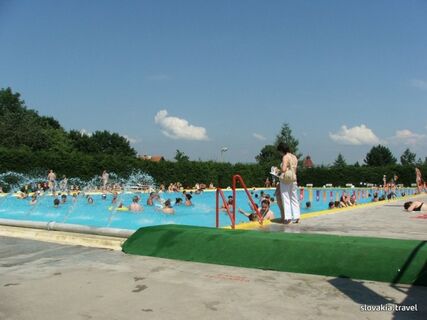
The Spa & Aquapark resort is in a beautiful aqua park, in the centre of Turčianske Teplice. It has two parts: ‘SPA‘ area (healing thermal water, 38 °C) and AQUAPARK area (thermal water up to 33 °C). Both are open throughout the year.
Termálne kúpalisko Vieska ponúka 50x25 metrový plavecký bazén, detský bazén a tobogány. Súčasťou areálu kúpaliska je mutlifunkčné ihrisko, lezecká stena, minigolf, futbal, tenis, petanque, volejbal, basketbal a nohejbal. Teplota vody dosahuje 26 - 27 °C.
The Donovaly Fun Arena adrenaline centre is expanding during the summer of 2017 with a unique novelty for Slovakia - a children's aqua experience-educational park with 9 attractions, which follow one another and form one whole experience.
Discover Donovaly quickly, ecologically and comfortably from the seat of a modern e-scooter and enjoy a lot of fun on two wheels.
TRY AN UNBELIEVABLE TANDEM FLIGHT OVER DONOVALY!
Over the months April to July 2008 the second toboggan run of its kind in Slovakia from the renowned German company Wiegand took shape in the vicinity of the TELEMIX Nová hoľa cablecar station and the Husky aprés ski bar.
Bungee trampolines are without doubt one of the most demanded attractions of amusement parks of recent years. They are a combination of an aluminium constructions, latex rubber and a very springy trampoline, all thought up by VIV Slovakia, s.r.o. Everything is driven by precisely tuned motors. There are 4 independent trampolines on each of which the jumper, secured in a special harness fastened to the X-jump part of the trampoline, can achieve heights of up to 7m and also forward and backwards moves thanks to the rubber which also maintain the balance of the jumper.
The rope centre is located in the forest bordering the main E77 road from Banská Bystrica and Ružomberok and with a length of more than 500m is one of the longest and largest rope centres in the whole of Slovakia.
The Monument Reserve of Popular Architecture in the central Slovakia commune ŠPANIA DOLINA consists of a unique set of miner houses built of wood and stones.
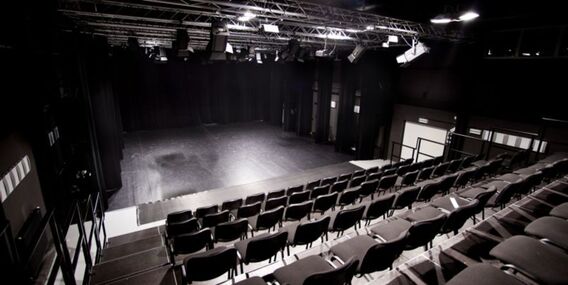
Divadlo Štúdio tanca je etablovaným profesionálnym tanečným divadlom. Na slovenskú scénu dlhodobo prináša autorské projekty, ktorými približuje publiku súčasný tanec a filozofiu moderného tanečného divadla.
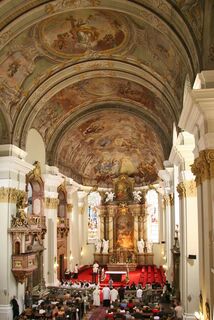
Rímskokatolícky farský kostol Panny Márie je súčasťou Banskej Bystrice už sedem storočí. Postavili ho nemeckí waldbürgeri (banskí ťažiari) ako prvú stavbu Mestského hradu a dodnes je tento kostol jeho najväčšou pýchou, poukazujúcou na slávne časy Stredoveku v banských mestách stredného Slovenska.
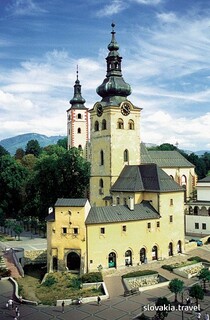
The town castle was once formed by several ancient buildings in the central Slovakian metropolis Banská Bystrica. Its task was to protect the income proceedings of copper and silver mining for the royal treasury.
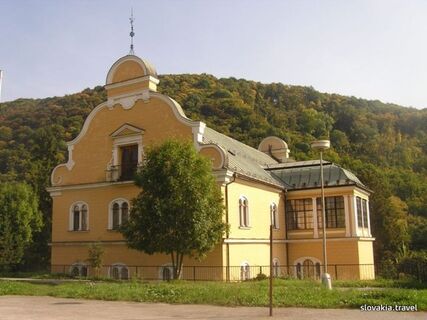
The Central Slovakia Museum is an institution that focuses on keeping record of the development of society and nature in Banská Bystrica region.
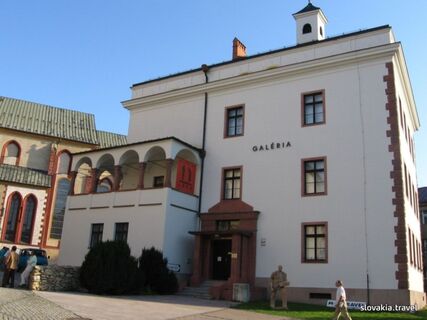
The Central Slovakia Gallery (formerly the State Gallery in Banská Bystrica) is a gallery presenting modern and contemporary art. It focuses mainly on the presentation and documentation of free graphic arts of the latter half of the 20thcentury, as well as on contemporary art.
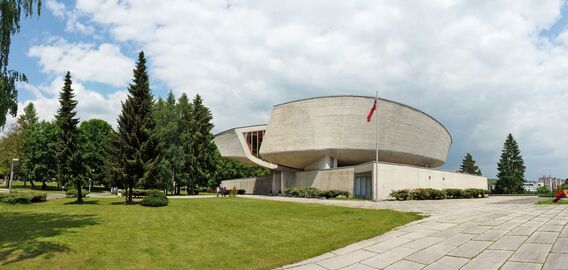
The Museum of the Slovak National Uprising (SNP) is situated in an architecturally unusual building built in 1969 as the Memorial of the Slovak National Uprising. It is located in the middle of a park that includes an open-air museum of heavy military equipment used in the SNP.
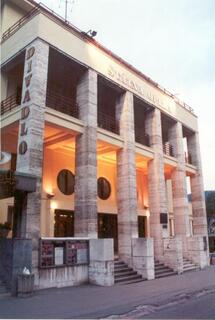
Štátna opera sídli v priestoroch Národného domu. Jeho budova bola postavená v rokoch 1927-1929. Navrhol ju významný slovenský architekt Emil Beluš. Vďaka ojedinelému architektonickému riešeniu bola stavba vyhlásená za národnú pamiatku.
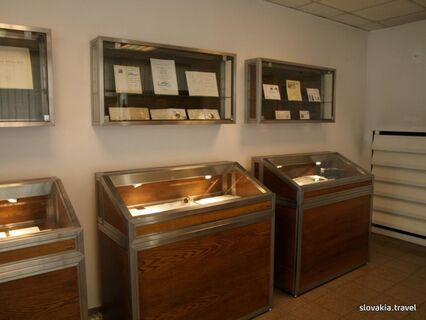
Poštové múzeum v Banskej Bystrici je unikátne múzeum svojho druhu na Slovensku. Expozícia obsahuje predmety, dokumentujúce vývoj poštovníctva, filatelistickú zbierku poštových známok aj sekciu pre deti s názvom Detská pošta.
he Town Castle in Kremnica is part of the NBS - Museum of Coins and Medals. The castle hill is one of the locations with the earliest settlement within the town. The town castle comprises a compound of medieval buildings from the 14th through 15th centuries, protected with double fortifications to which town walls are connected. The town walls rank among the best-preserved town fortifications in Slovakia.
Kremnica, the town situated in central Slovakia in Kremnické vrchy mountains won an attribute of the Golden Town. Gold was mined in its environs for centuries. It was also in Kremnica where golden coins were struck using the metal of the local ore. The mining past of Kremnica is witnessed to by several technical monuments.