Králická strait
Králická gorge is a beautiful gorge in the unique nature in the Kremnické hills. An easy walk in the gorge, ending with Králický waterfall, but what more could you want?
The primeval forest of Badínsky prales, with its rare primary fir and beech habitat almost untouched by human activity, is one of the oldest protected areas in Slovakia. It was visited by Prince Charles in 2000.
Located in the south-eastern part of the Kremnické pohorie mountains, 10 km to the south-west of Banská Bystrica, the area of primeval forest has been protected since 1913, thus being one of those natural reserves in Slovakia protected by law for a longest period of time.
Its original area of 20.51 ha has been subsequently extended to the current 30.70 ha. In 1994 the primeval forest received a national landscape reserve status as a remnant of original Carpathian woodland. The primary fir and beech forest, mixed with spruce, maple, ash and elm, is notable for huge silver firs (200 to 400 years old, the tallest being 46 m high and having the trunk perimeter of 553 cm) and European beeches (trunk perimeter of 496 cm). A walk in the shadow of these enormous trees makes an unforgettable experience as it provides a unique opportunity to enter an original aged forest untouched by human activity.
European white elm (Ulmus laevis), that has become an endangered species, is plentiful here. Several young trees were taken to England even by Princ Charles himself. The primeval forest provides habitat for many protected species of both flora and fauna lynx (Lynx lynx), newt (Triturus montandoni), rosalia longicorn (Rosalia alpina), etc.). To secure the lowest possible human interference, only fallen trunks threatening the forest road operation are removed.
The primeval forest of Badínsky prales has been completely closed to the public under the Nature and Landscape Conservation Act. It may only be accessed by expert excursions accompanied by a guide from the Lesy SR (Forests of the Slovak Republic) branch office in Slovenská Ľupča or by experts from the Štátna ochrana prírody SR (National Nature Conservation Authority) office, the Faculty of Forestry of the Technical University in Zvolen, or other scientific and research institutions.
Operation times unavailable.


Králická gorge is a beautiful gorge in the unique nature in the Kremnické hills. An easy walk in the gorge, ending with Králický waterfall, but what more could you want?
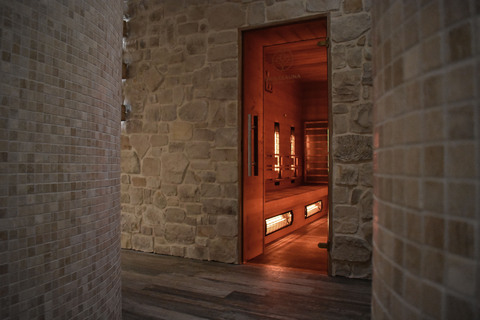
We want you to feel great with us, which is why we have created a place for your moments of relaxation and well-being thanks to the use of natural materials. Stone, wood and warm tones will create the right atmosphere for your relaxation. Trees have always given people energy and strength. That's why wood has a story in our wellness center. He is 138 years old and thus creates an environment full of positive energy. You can release harmful substances from the body in our saunas. INFRASAUNA is equipped with the most modern infrared radiators, which have incredible regenerative and healing effects for your body, joints and muscles. SALT STEAM and EUCALYPTE SAUNA relax and cleanse the respiratory tract and lungs and have an excellent detoxifying effect on the whole organism. FINNISH SAUNA, a popular classic, is an integral part of the wellness center. After the sauna, you will be perfectly refreshed by the COOLING POOL with a waterfall. A RELAXING ROOM with a starry sky will give you a feeling of peace. The dominant feature of our wellness center is a spacious WHIRLPOOL for relaxing and regenerating muscles and joints thanks to massage jets. Entrance to the wellness center only from 15 years.
Kremnica, the town situated in central Slovakia in Kremnické vrchy mountains won an attribute of the Golden Town. Gold was mined in its environs for centuries. It was also in Kremnica where golden coins were struck using the metal of the local ore. The mining past of Kremnica is witnessed to by several technical monuments.
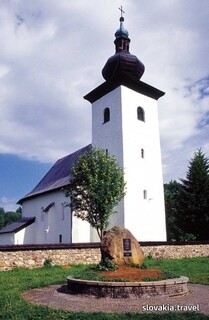
In a beautiful place near Kremnické Bane, central Slovakia, a stone is erected next to an ancient church of John Baptist. It reminds the passers-by that it is exactly here that the geographical centre of Europe is situated.
The Arboretum Borová hora in the town of Zvolen in central Slovakia is remarkable even in the European context, as it concentrates original wood species in their generic and geographic diversity. There is also the biggest collection of rose plants in Slovakia.
Len kúsok od cesty medzi obcami Dolná Mičiná a Čerín sa nachádza jedinečná prírodná pamiatka – tzv. Mičinské travertíny. Ide o údolnú travertínovú terasu posiatu malými travertínovými kôpkami – krátermi, z ktorých vyteká minerálna voda.
The Harmanecká jaskyňa cave is situated in the Veľká Fatra Mts. The cave is known for occurrence of rare white soft sinter, tall pagodas and sinter lakes.
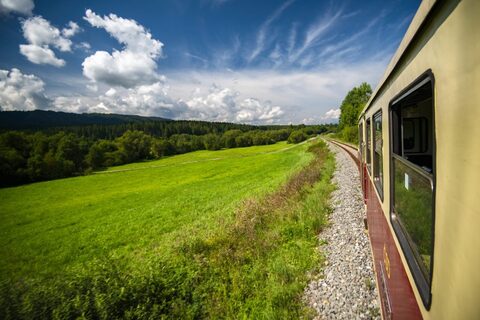
Nasadnite na Banícky expres a vydajte sa s nami do kraja striebra a zlata. Zážitkový vlak premáva po jednej z najkrajších železničných tratí tam, kde banícka tradícia prežíva do dnešných dní: do Banskej Štiavnice a do Kremnice.
At present, Tajch Aladár is used for recreation and relaxation in a very pleasant natural environment, which is complemented by planted linden trees.
Leroy Bar & Café nie je len podnik, kde si môžete dať kvalitnú kávu, ale aj miesto, kde si môžete prísť oddýchnuť od každodenného zhonu. Snažíme sa, aby ste sa u nás cítili príjemne a po každej návšteve sa chceli ku nám znovu vrátiť.
Vitajte v srdci Stredného Slovenska, Vitajte v Banskej bystrici, Vitajte v Plzenskej reštaurácii...
Čierna Ovca sa nachádza na rozhraní Veľkej Fatry a Kremnických vrchov v bezprostrednej blízkosti sviežeho horského potoka. Jedinečnosť tohto prostredia znásobuje prítomnosť Harmaneckej jaskyne, ktorej návšteva začína aj končí, práve u nás. A preto doprajte kulinársky zážitok svojmu telu, v krásnom prostredí Národného parku Veľká Fatra.
Offering a garden and sun terrace, Koliba u Rytiera is situated in Zvolen, 3.2 km from Zvolen Castle. Zvolen Castle is 3.2 km from the property. Free WiFi is offered throughout the property.
Donovalský pivovar sa zrodil v krásnych, no drsných horách stredného Slovenska. Jeho život sa začal našim odvážnym a pritom tak prostým odhodlaním: už od počiatku variť poctivé pivo. Náš unikátny pivovar okrem útulnej reštaurácie ponúka aj čerstvé pekárenské výrobky z vlastnej pekárne a útulnú kaviareň. Milovníkom hôr prinášame osobitú skupinu pív, z ktorej je každé jedno výnimočné.
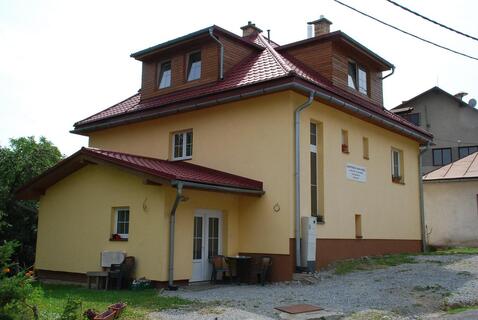
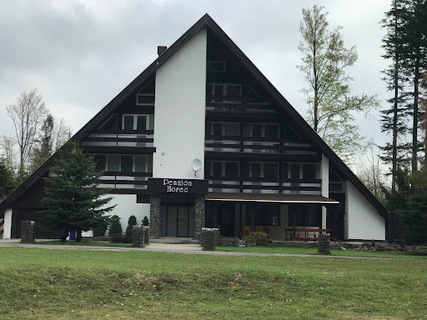
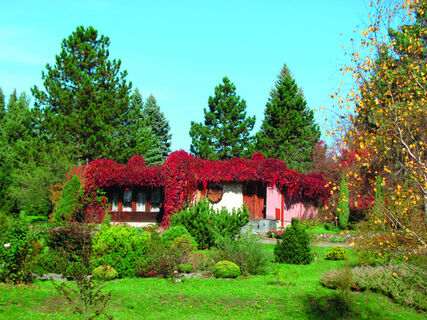
The pension is located in the beautiful Kremnicke pohorie in the center of Králiky recreation area at an altitude of 900m. n. m, 14 km northwest of Banska Bystrica. It enjoys the perfect holiday conditions throughout the year.
Providing free WiFi, Penzión Olympia** offers accommodations in Banská Bystrica, 5.1 km from Central Slovakian Gallery and 14.5 km from Ski Sachticky. Featuring a 24-hour front desk, this property also provides guests with a restaurant. At the guesthouse, every room has a closet. A buffet breakfast is available daily at Penzión Olympia**.
Offering a restaurant, Motel Madona is located in Banská Bystrica, 2 km from the historical city centre with its castle and 6.4 km from the Medvedica Ski Area. Free WiFi access is available.
Quietly situated within 1 km from the centre of Banska Bystrica, Penzion Majak houses a restaurant with a large selection of pizza and international cuisine. There is a summer terrace with barbecue facilities. All rooms come with satellite TV, a fridge and a private bathroom with shower and hairdryer. Free Wi-Fi is available in the entire property. Within a 5-minute there is an indoor swimming pool and a summer city beach with sports and water activities. The Europa shopping centre, which is open daily, is 500 m away. The Kraliky ski centre is 5 km away and Donovaly is 20 km from the Majak Penzion. Parking is offered free of charge. We speak 2 languages, including yours! Penzion Majak has been welcoming Booking.
One of our top picks in Banská Bystrica. Offering an outdoor pool and an à-la-carte restaurant, Villa 27 is located in 7 km from Banská Bystrica. Free WiFi access is available. Guests can relax in a sauna or enjoy mini golf, both available for a surcharge.
Offering a garden and sun terrace, Koliba u Rytiera is situated in Zvolen, 3.2 km from Zvolen Castle. Zvolen Castle is 3.2 km from the property. Free WiFi is offered throughout the property.
Náučná zaistená cesta (via ferrata) Komín sa nachádza v Kremnických vrchoch v podcelku Flochovský chrbát.
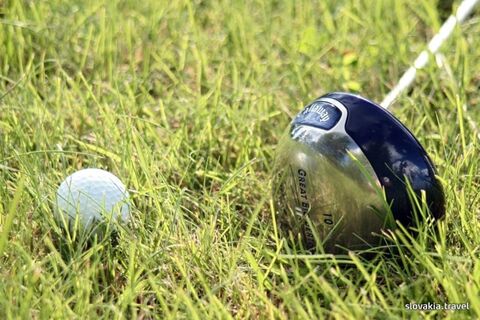
Na polceste medzi Banskou Bystricou a Zvolenom, len 1 kilometer od letiska na Sliači nájdete malebné golfové ihrisko nesúce názov celej lokality - Tri duby. Golfový areál určený pre začiatočníkov aj profesionálov, širokú verejnosť aj hostí tu vyrástlo v roku 2004.
Below the foothills of the Kremnické vrchy highlands, north-west of the town of Zvolen at an altitude of 320 m above sea level, we find Kováčová Spa, specialising in the treatment of diseases of the musculoskeletal apparatus and nervous system.
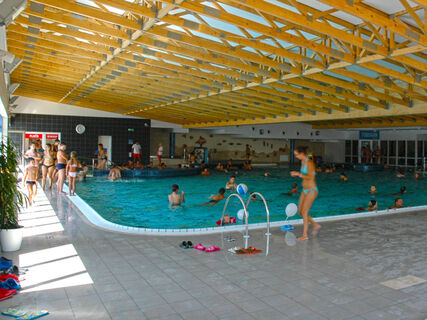
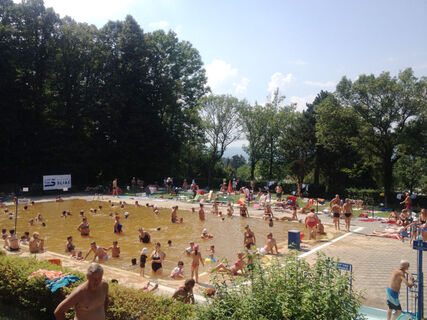
Entertainment and relax in the thermal healing water all the year round. The year-round open aquapark was built in place of the previous thermal swimming pool.
The spa Sliač is situated in the western part of the basin Zvolenská kotlina between the towns Banská Bystrica and Zvolen over the valley of river Hron. The open setting of the spa, suitable climate at a favourable sea level altitude and the yearly temperature averages oscillating around 8.2 °C are the characteristics that classify Sliač among spas with most favourable position.
Termálne kúpalisko v Kúpeľoch Sliač – liečivá prírodná voda v lone nádhernej sliačskej prírody. Užite si výnimočný pokoj a liečivé účinky termálnej vody v Kúpeľoch Sliač v kúpeľoch vášho srdca.
Adrenalinové centrum z množstvom leteckých zážitkou na celý život.
The baths in Sklené Teplice, one of Slovakia’s oldest baths, will let you warm your bones, relax your body and mind, and find a gorgeous landscape.
The centre of the southern part of Turiec is the spa Turčianske Teplice. The local hot springs were first mentioned in the 13th century. The legend has that King Sigismund of Luxembourg bathed in local springs in 1423. The town of Kremnica acquired the land with springs in 1532 and invested in construction of the first spa buildings. The spa was especially popular and visited in time of wars with the Habsburgs when the noble rebels used it as a refuge.
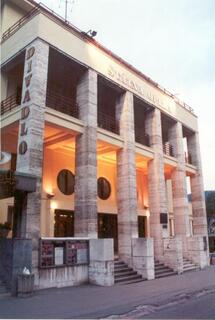
Štátna opera sídli v priestoroch Národného domu. Jeho budova bola postavená v rokoch 1927-1929. Navrhol ju významný slovenský architekt Emil Beluš. Vďaka ojedinelému architektonickému riešeniu bola stavba vyhlásená za národnú pamiatku.
The Central Slovakia Museum is an institution that focuses on keeping record of the development of society and nature in Banská Bystrica region.
The town castle was once formed by several ancient buildings in the central Slovakian metropolis Banská Bystrica. Its task was to protect the income proceedings of copper and silver mining for the royal treasury.
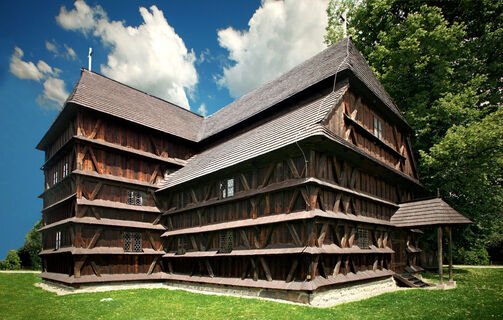
The wooden articled church was included in 2008, along with seven wooden churches of the Slovak part of Carpathian Mountain Area, on the UNESCO Word Heritage List.
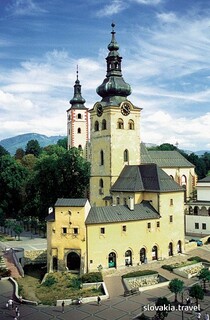
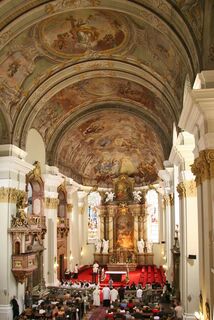
Rímskokatolícky farský kostol Panny Márie je súčasťou Banskej Bystrice už sedem storočí. Postavili ho nemeckí waldbürgeri (banskí ťažiari) ako prvú stavbu Mestského hradu a dodnes je tento kostol jeho najväčšou pýchou, poukazujúcou na slávne časy Stredoveku v banských mestách stredného Slovenska.
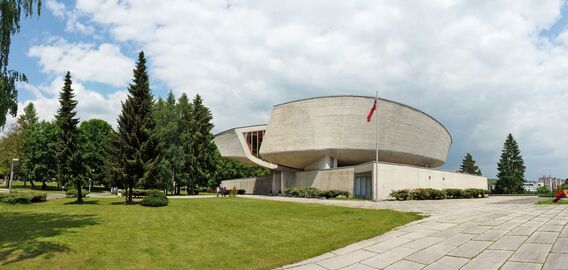
The Museum of the Slovak National Uprising (SNP) is situated in an architecturally unusual building built in 1969 as the Memorial of the Slovak National Uprising. It is located in the middle of a park that includes an open-air museum of heavy military equipment used in the SNP.
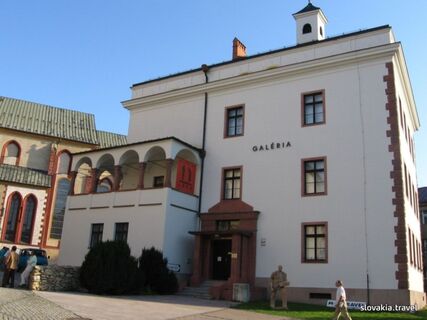
The Central Slovakia Gallery (formerly the State Gallery in Banská Bystrica) is a gallery presenting modern and contemporary art. It focuses mainly on the presentation and documentation of free graphic arts of the latter half of the 20thcentury, as well as on contemporary art.
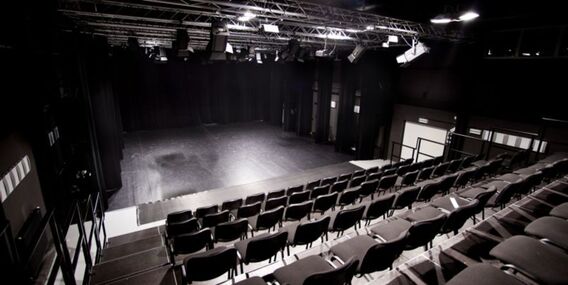
Divadlo Štúdio tanca je etablovaným profesionálnym tanečným divadlom. Na slovenskú scénu dlhodobo prináša autorské projekty, ktorými približuje publiku súčasný tanec a filozofiu moderného tanečného divadla.
Kremnica, the town situated in central Slovakia in Kremnické vrchy mountains won an attribute of the Golden Town. Gold was mined in its environs for centuries. It was also in Kremnica where golden coins were struck using the metal of the local ore. The mining past of Kremnica is witnessed to by several technical monuments.
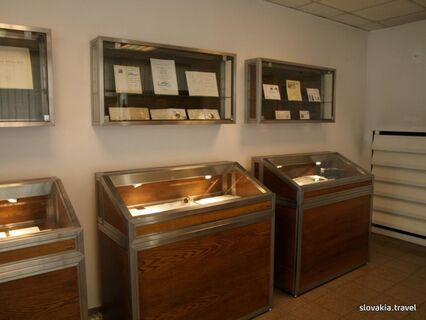
Poštové múzeum v Banskej Bystrici je unikátne múzeum svojho druhu na Slovensku. Expozícia obsahuje predmety, dokumentujúce vývoj poštovníctva, filatelistickú zbierku poštových známok aj sekciu pre deti s názvom Detská pošta.