The Castle of Slovenská Ľupča

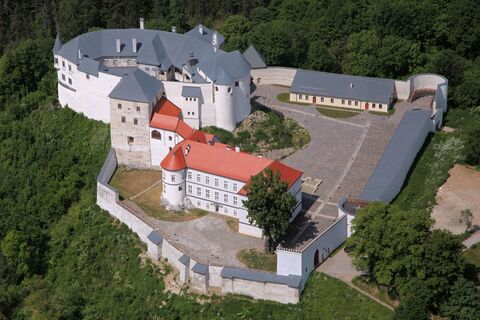
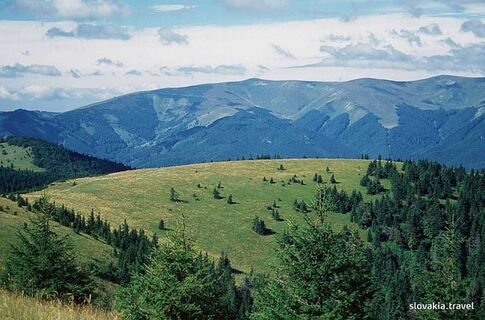
One of the best preserved castles in Slovakia stands above the village Slovenská Ľupča at the foothills of the mountains Nízke Tatry.
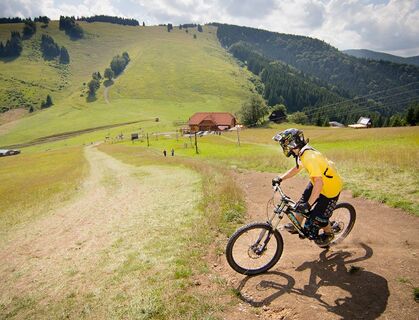
TRY AN UNBELIEVABLE TANDEM FLIGHT OVER DONOVALY!
A unique experience, the sense of unfastening yourself from the ground, the unreal freedom, absolute adrenaline when soaring in the air on the paraglider along with your flight instructor on a tandem flight. You fly at a height of 200 - 500 meters above the ground for about 10 to 15 minutes and do not need any previous knowledge of paragliding. It is possible to fly all year round, depending on the appropriate weather conditions and the operation of the TELEMIX Nová hoľa cable car.
Discover how wonderful it is to have a look from a bird's eye view.
http://www.parksnow.sk/leto/en/atrakcie-funarena.php
Operation times unavailable.
Situation of the village Blatnica next to the Gaderská dolina and Blatnická dolina valleys makes of it an ideal salient point for the trips to the spectacular valleys of the Veľká Fatra Mts.
The National Park of Veľká Fatra, lying in central Slovakia is typical for its continuous forest, long valleys and the largest locality of original yew tree occurrence in Europe.
Demänovská jaskyňa slobody is part of the huge underground karst system in the valley Demänovská dolina below the Nízke Tatry Mts. It boasts a unique drip stone ornamentation, which makes it one of the most beautiful caves of Europe.
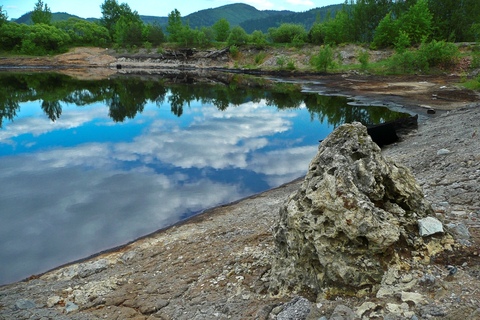
The village of Bešeňová is one of the few precious places with occurrence of "freshwater" limestone, so-called travertine. These precious calcite forms arised thanks to mineral contents of water, its temperature and, of course, the surface and structure of the landscape. If you have some free time, come and visit this "forsaken" pit situated to the north of the village.
On the right side of the valley Demänovská dolina below the northern slopes of the mountains Nízke Tatry is another cave open to public - Demänovská ľadová jaskyňa.
The centre of the southern part of Turiec is the spa Turčianske Teplice. The local hot springs were first mentioned in the 13th century. The legend has that King Sigismund of Luxembourg bathed in local springs in 1423. The town of Kremnica acquired the land with springs in 1532 and invested in construction of the first spa buildings. The spa was especially popular and visited in time of wars with the Habsburgs when the noble rebels used it as a refuge.
Termálne kúpalisko Vieska ponúka 50x25 metrový plavecký bazén, detský bazén a tobogány. Súčasťou areálu kúpaliska je mutlifunkčné ihrisko, lezecká stena, minigolf, futbal, tenis, petanque, volejbal, basketbal a nohejbal. Teplota vody dosahuje 26 - 27 °C.
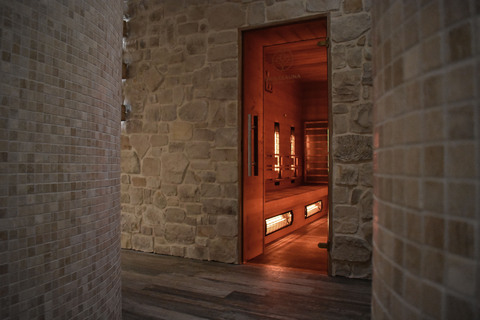
The Spa & Aquapark resort is in a beautiful aqua park, in the centre of Turčianske Teplice. It has two parts: ‘SPA‘ area (healing thermal water, 38 °C) and AQUAPARK area (thermal water up to 33 °C). Both are open throughout the year.
This fine park, which is located in the beautiful setting of the Choč Mountains overlooking both the Low and Western Tatras, boasts a wide variety of three indoor and thirteen outdoor pools, nine outdoor water slides, a number of children's slides and hot tubs. The resort also features a new pebble beach that includes a nudist area. Relaxation and entertainment for the whole family are provided all year long.
One of the best preserved castles in Slovakia stands above the village Slovenská Ľupča at the foothills of the mountains Nízke Tatry.
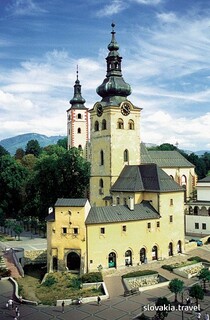
The town castle was once formed by several ancient buildings in the central Slovakian metropolis Banská Bystrica. Its task was to protect the income proceedings of copper and silver mining for the royal treasury.
Biely Potok is the salient point for the community of Vlkolínec – a monument reserve of folk architecture. This extraordinary and remarkable oasis of folk architecture was included in the UNESCO World Heritage List in 1993.
Ruins of the Blatnický hrad Castle stand near the village Blatnica on the low but sharp limestone ridge, which separates Gaderská dolina valley from the Turčianska kotlina basin. It dates to the 13th century.
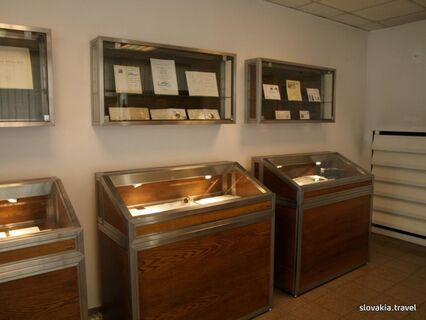
Permanent expositions: geology, palaeontology, botanic, zoology, archaeology, feudalisms and guilds, folk lore, sacral art, history of Liptov 1948 - 1945, life and work of A. Hlinka, history of paper-making, history.
The Castle of Sklabiňa towers on the edge of the basin Turčianska kotlina and the mountains Veľká Fatra. It was first mentioned in 1242. After 1320, the Sklabiňa Castle became the seat of the county administration of Turiec.
Likavský hrad is situated in the north-western part of Liptov. The Castle was referred to for the first time in 1315. Its construction started with the intention to have a guarding point over the passage across the river Váh and the trade route from the Váh Basin to Orava and further to Poland.
The wooden articled Evangelical church near the village Svätý Kríž is one of the largest wooden buildings in the Central Europe which was moved here from Paludza between 1974 and 1982.
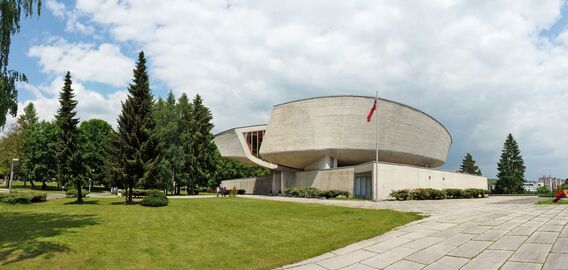
The Museum of the Slovak Village is the largest ethnographic open-air exposition in Slovakia. The museum, located in Jahodnícke háje in the southeastern part of the town of Martin, has been built by the Slovak National Museum in Martin since the 1960s. It provides a picture of traditional folk architecture, housing and the way of life of people who lived in northwestern Slovakia in the latter half of the 19th century and the first half of the 20th century.