Banská Bystrica Town Castle

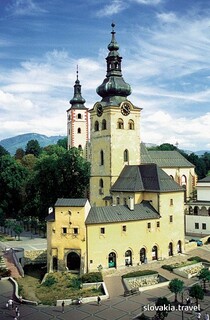
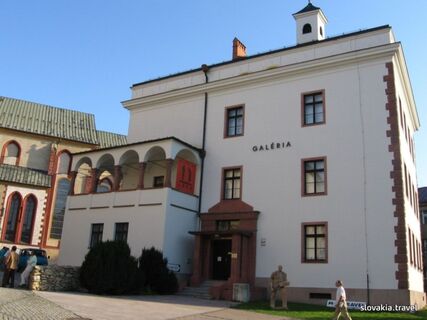
The town castle was once formed by several ancient buildings in the central Slovakian metropolis Banská Bystrica. Its task was to protect the income proceedings of copper and silver mining for the royal treasury.
The Harmanecká jaskyňa cave is situated in the Veľká Fatra Mts. The cave is known for occurrence of rare white soft sinter, tall pagodas and sinter lakes.
The entrance to the area of the cave called Izbica has been known since time immemorial and it provided shelter to loggers in bad weather. In 1932, its continuation was discovered and in 1950, it was opened to public.
The sightseeing route is 1,020 m long and takes about 60 minutes. So far the explorers discovered 2,763 metres of cave corridors.
The cave boasts bulky domes, chimneys and abysses. The ornamentation of parts called the White Dome and the Treasury are considered the most beautiful. The cave, thanks to its white colouring is also called the White Cave.
Operation times unavailable.
The National Park of Veľká Fatra, lying in central Slovakia is typical for its continuous forest, long valleys and the largest locality of original yew tree occurrence in Europe.
Situation of the village Blatnica next to the Gaderská dolina and Blatnická dolina valleys makes of it an ideal salient point for the trips to the spectacular valleys of the Veľká Fatra Mts.
The centre of the southern part of Turiec is the spa Turčianske Teplice. The local hot springs were first mentioned in the 13th century. The legend has that King Sigismund of Luxembourg bathed in local springs in 1423. The town of Kremnica acquired the land with springs in 1532 and invested in construction of the first spa buildings. The spa was especially popular and visited in time of wars with the Habsburgs when the noble rebels used it as a refuge.
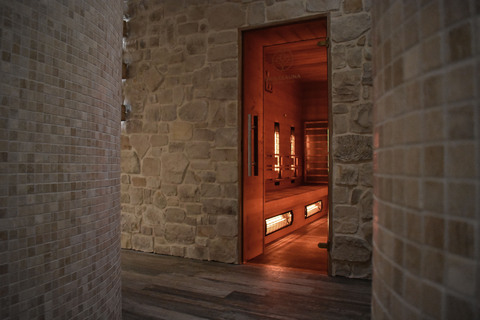
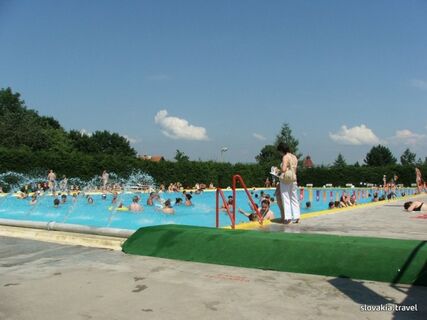
The Spa & Aquapark resort is in a beautiful aqua park, in the centre of Turčianske Teplice. It has two parts: ‘SPA‘ area (healing thermal water, 38 °C) and AQUAPARK area (thermal water up to 33 °C). Both are open throughout the year.
Termálne kúpalisko Vieska ponúka 50x25 metrový plavecký bazén, detský bazén a tobogány. Súčasťou areálu kúpaliska je mutlifunkčné ihrisko, lezecká stena, minigolf, futbal, tenis, petanque, volejbal, basketbal a nohejbal. Teplota vody dosahuje 26 - 27 °C.
The town castle was once formed by several ancient buildings in the central Slovakian metropolis Banská Bystrica. Its task was to protect the income proceedings of copper and silver mining for the royal treasury.
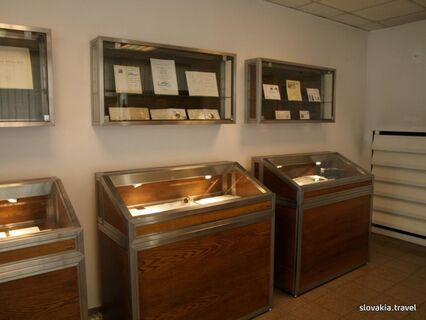
he Town Castle in Kremnica is part of the NBS - Museum of Coins and Medals. The castle hill is one of the locations with the earliest settlement within the town. The town castle comprises a compound of medieval buildings from the 14th through 15th centuries, protected with double fortifications to which town walls are connected. The town walls rank among the best-preserved town fortifications in Slovakia.
Ruins of the Blatnický hrad Castle stand near the village Blatnica on the low but sharp limestone ridge, which separates Gaderská dolina valley from the Turčianska kotlina basin. It dates to the 13th century.
One of the best preserved castles in Slovakia stands above the village Slovenská Ľupča at the foothills of the mountains Nízke Tatry.
High above the village Kláštor pod Znievom in the Malá Fatra Mts. raise the ruins of the Zniev Castle. It is the second highest situated castle in Slovakia (985 m).
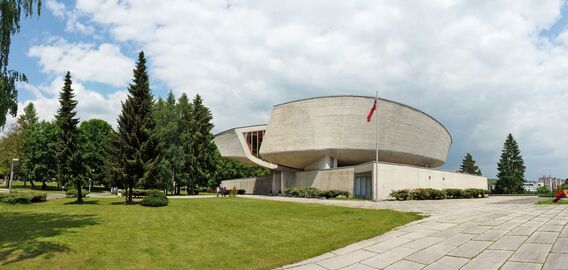
The Museum of the Slovak Village is the largest ethnographic open-air exposition in Slovakia. The museum, located in Jahodnícke háje in the southeastern part of the town of Martin, has been built by the Slovak National Museum in Martin since the 1960s. It provides a picture of traditional folk architecture, housing and the way of life of people who lived in northwestern Slovakia in the latter half of the 19th century and the first half of the 20th century.
The Castle of Sklabiňa towers on the edge of the basin Turčianska kotlina and the mountains Veľká Fatra. It was first mentioned in 1242. After 1320, the Sklabiňa Castle became the seat of the county administration of Turiec.
The Zvolen Castle, which is located on the bank of the Slatina River, is the most distinctive feature and symbol of the Central Slovakian town of Zvolen. An armoured train that reminds the Slovak National Uprising is placed nearby the castle.
The ruins of the medieval Šášov Castle stand above the river Hron not far away from Žiar nad Hronom in central Slovakia. According to a legend, the lord of the Zvolen Castle had it built for his court joker who saved his life while hunting.
The Pustý hrad Castle (also known as the Old Castle of Zvolen) is situated near Zvolen on the slope of a forested mountain in the Javorie mountain range, above the confluence of the Hron and Slatina rivers, in central Slovakia. It is surprisingly large, comparable with the more famous Spiš Castle.